Finding the Right Forest
Before anything else, you need to know which pines in your area actually produce good fatwood. Here in the Basque Country, the best ones are Scots pine (Pinus sylvestris) and Maritime pine (Pinus pinaster). A quick search will tell you which species dominate your region and what you are likely to find nearby.
Old forests are always your best bet. Planted forests can work too, but wild, untouched ones give you much better chances. The older and bigger the trees, the better your odds.
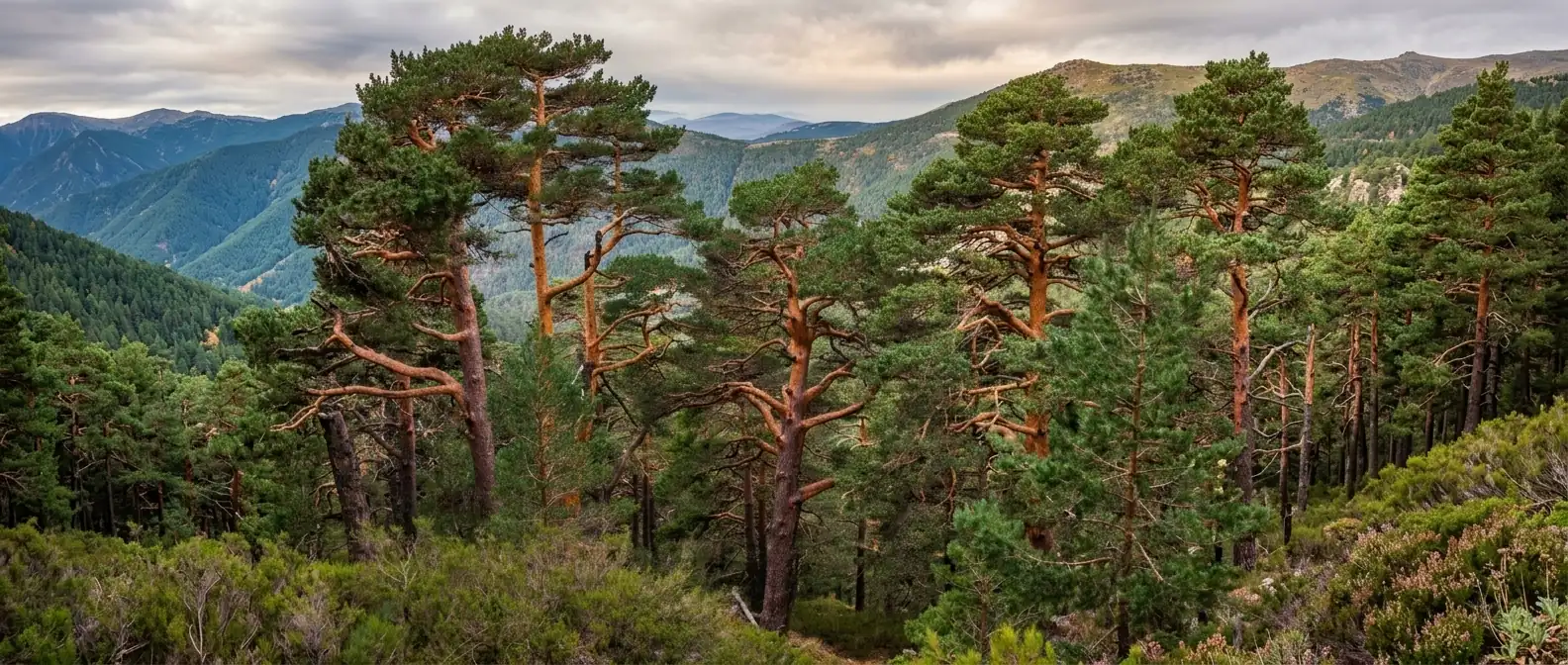
Scots Pine (Pinus sylvestris) trees, recognizable by their characteristic orange-hued upper bark, in the Sierra de Guadarrama, Spain.
How to Find Fatwood: The Three Signs I Look For
Whenever I head out, I’m looking for these three things:
- Old stumps from trees cut down years ago.
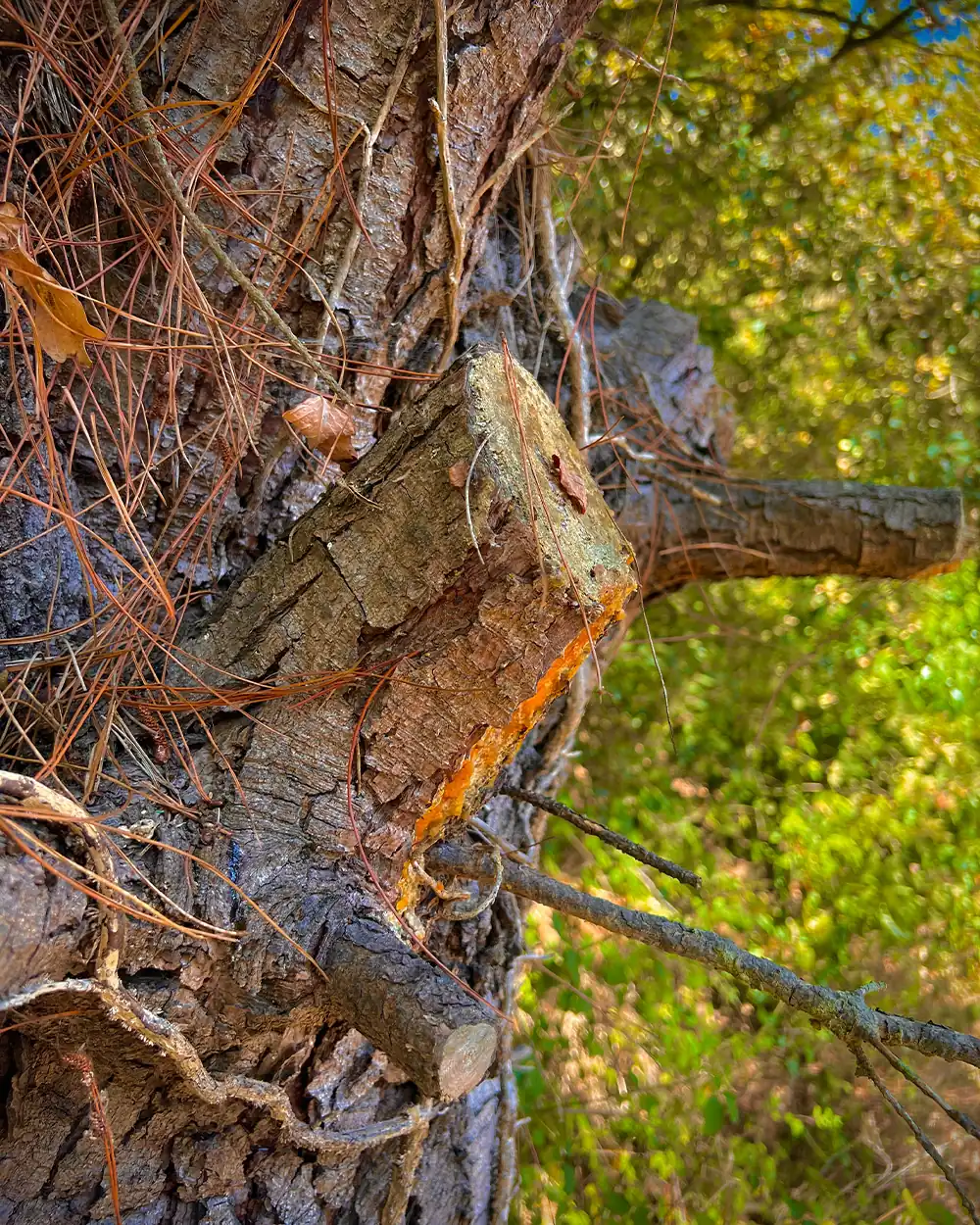
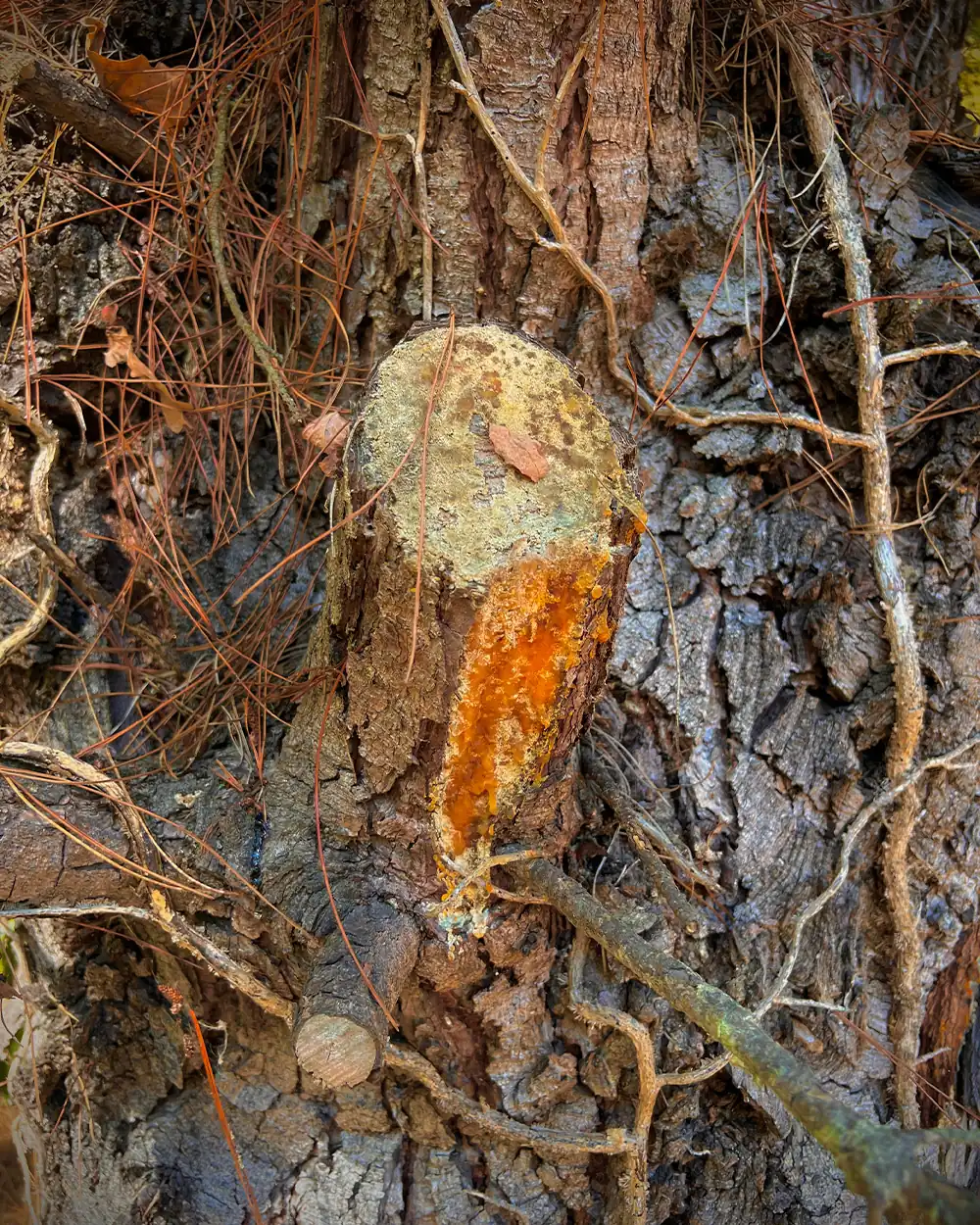
- Trees with branches cut off, leaving a stub sticking out of the main trunk.
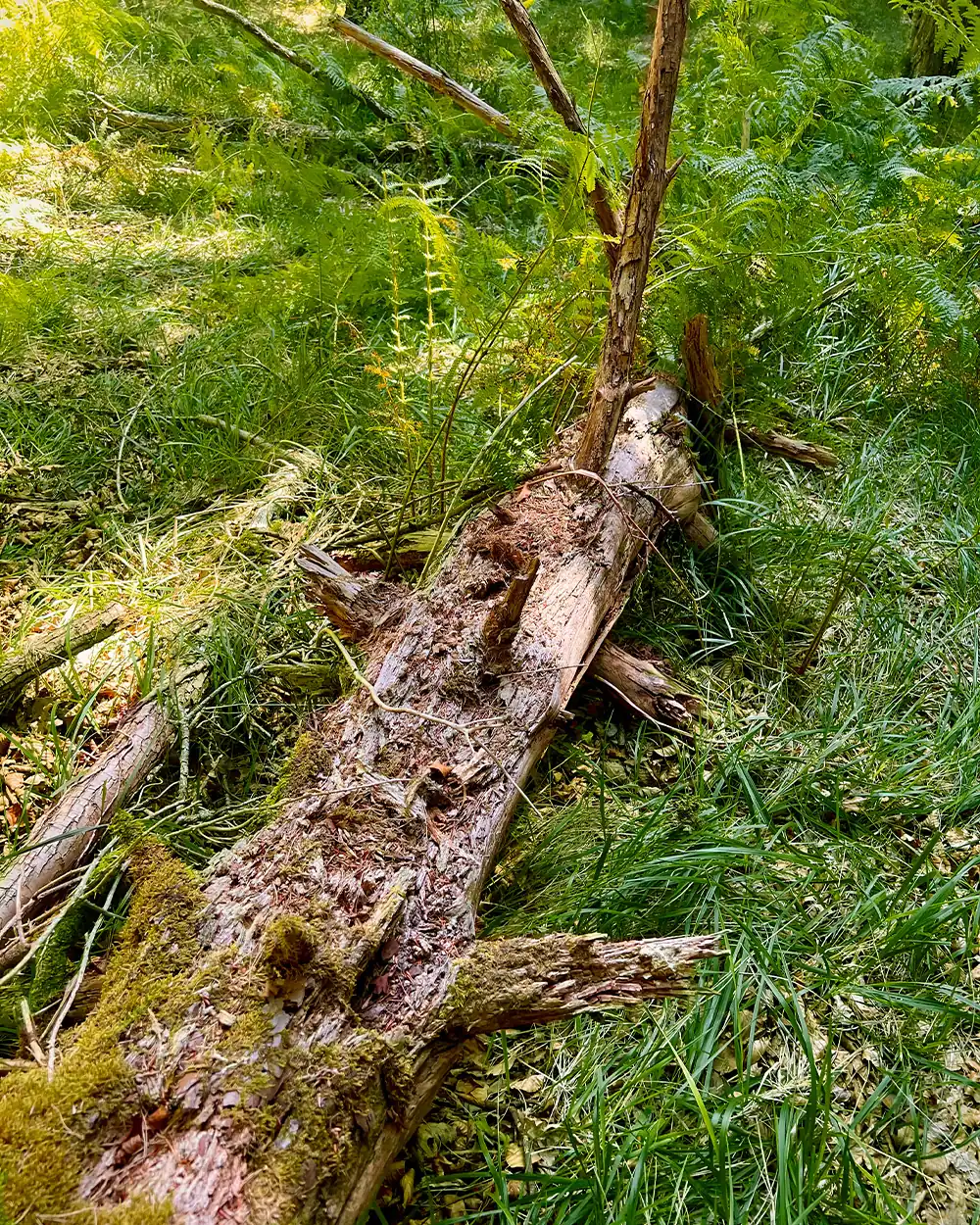
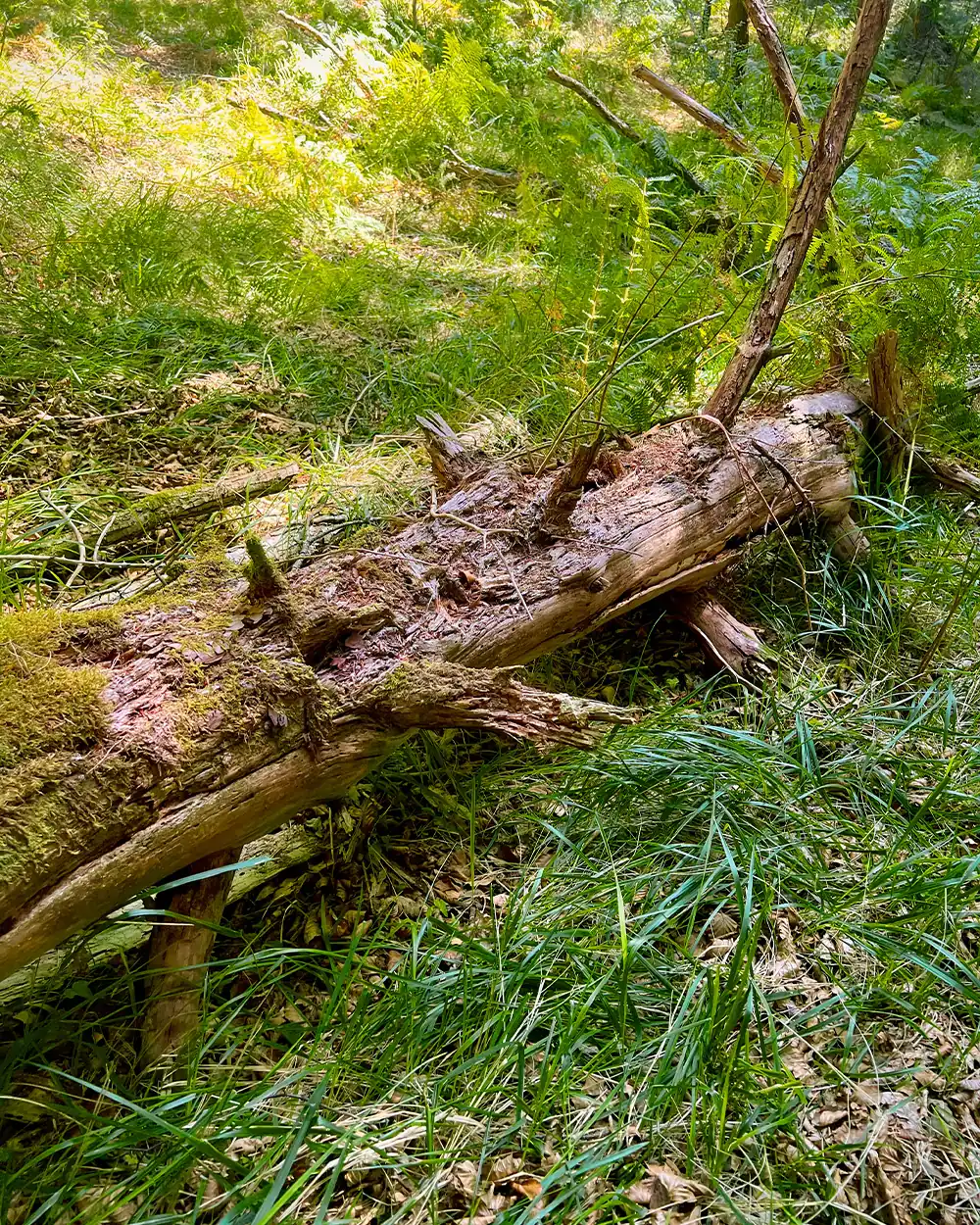
- Fallen trees, pines that fell over and have been rotting on the forest floor for years.
Each one has its own tricks for finding good spots, so I’ll go through them one by one.
1. Old Stumps
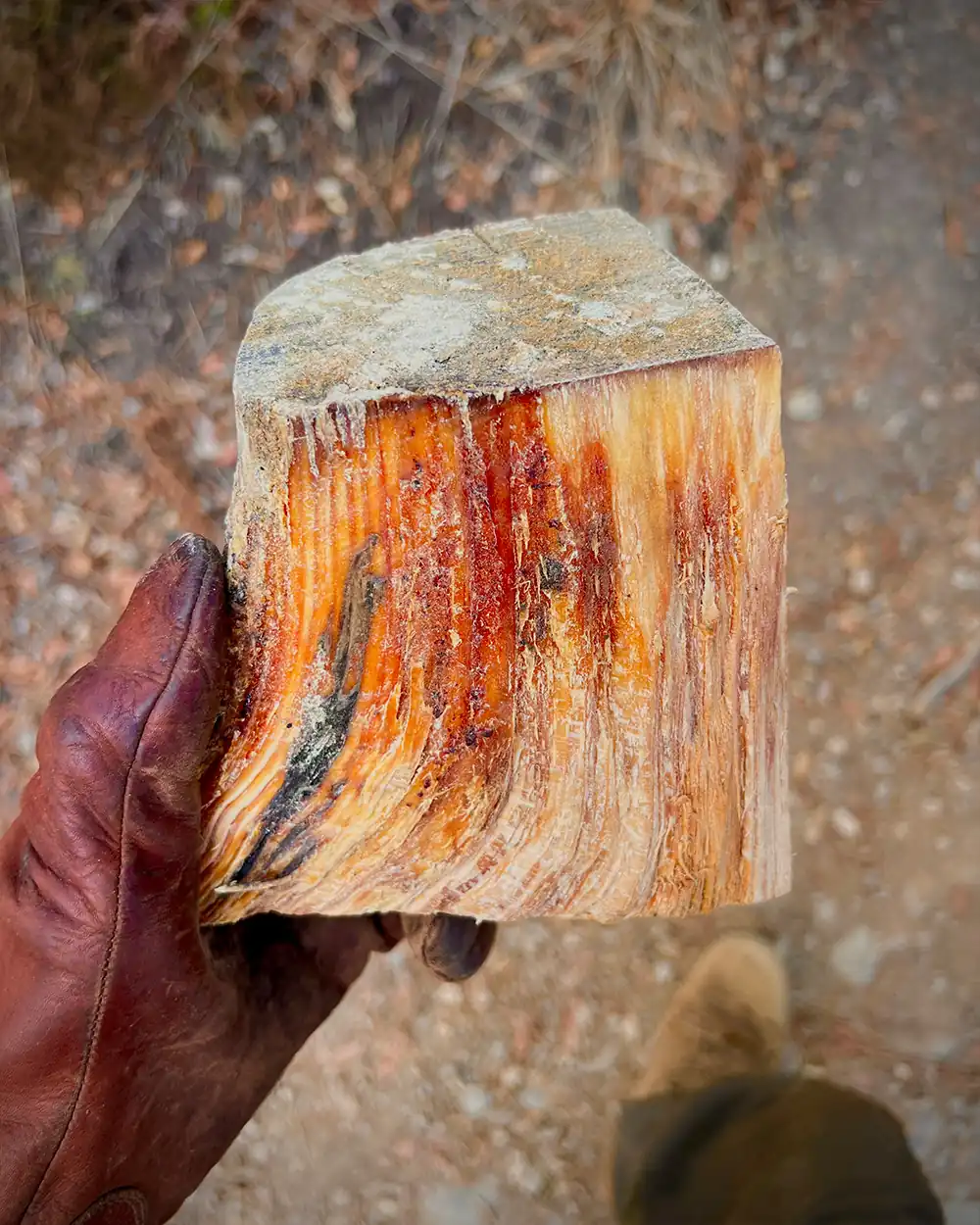
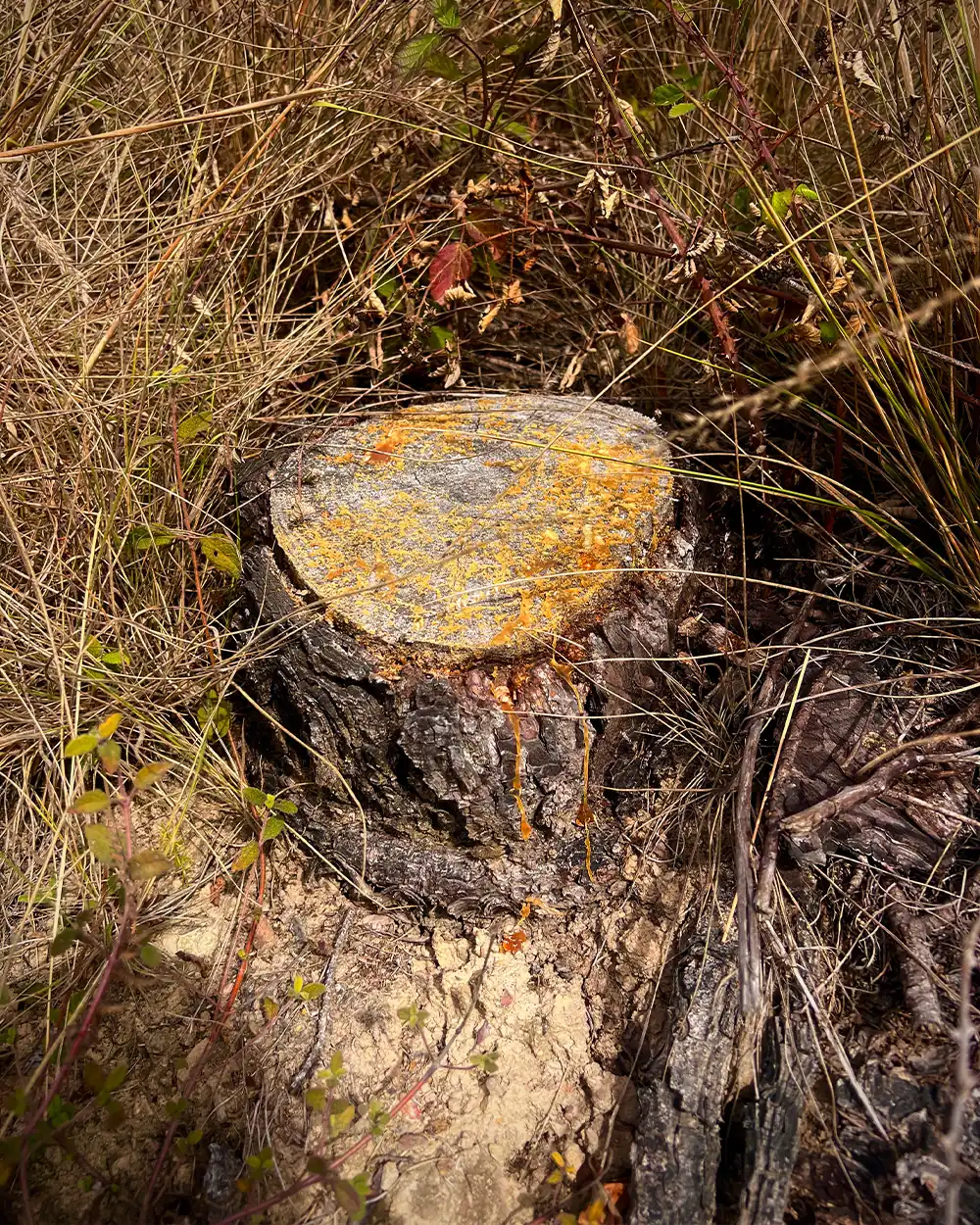
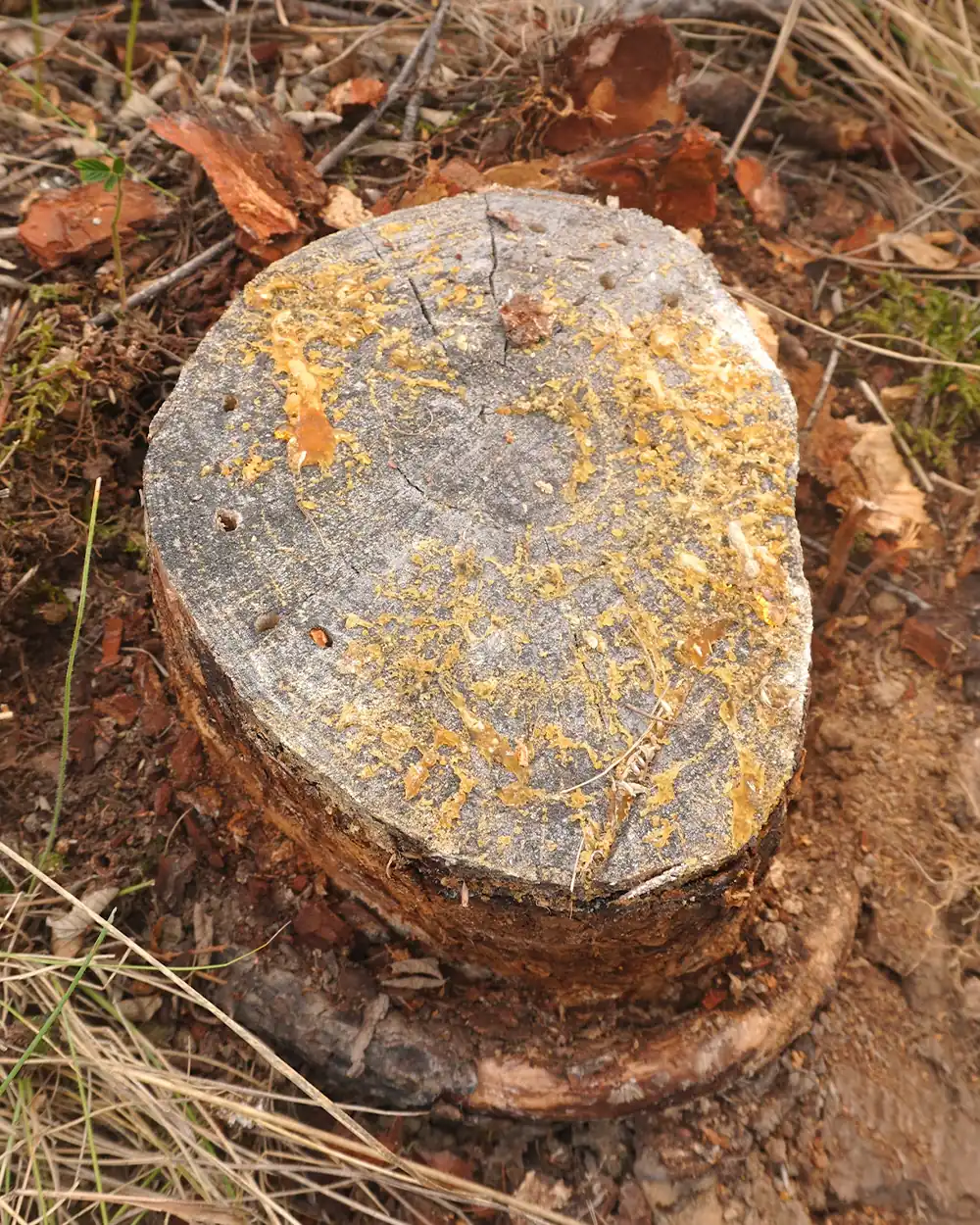
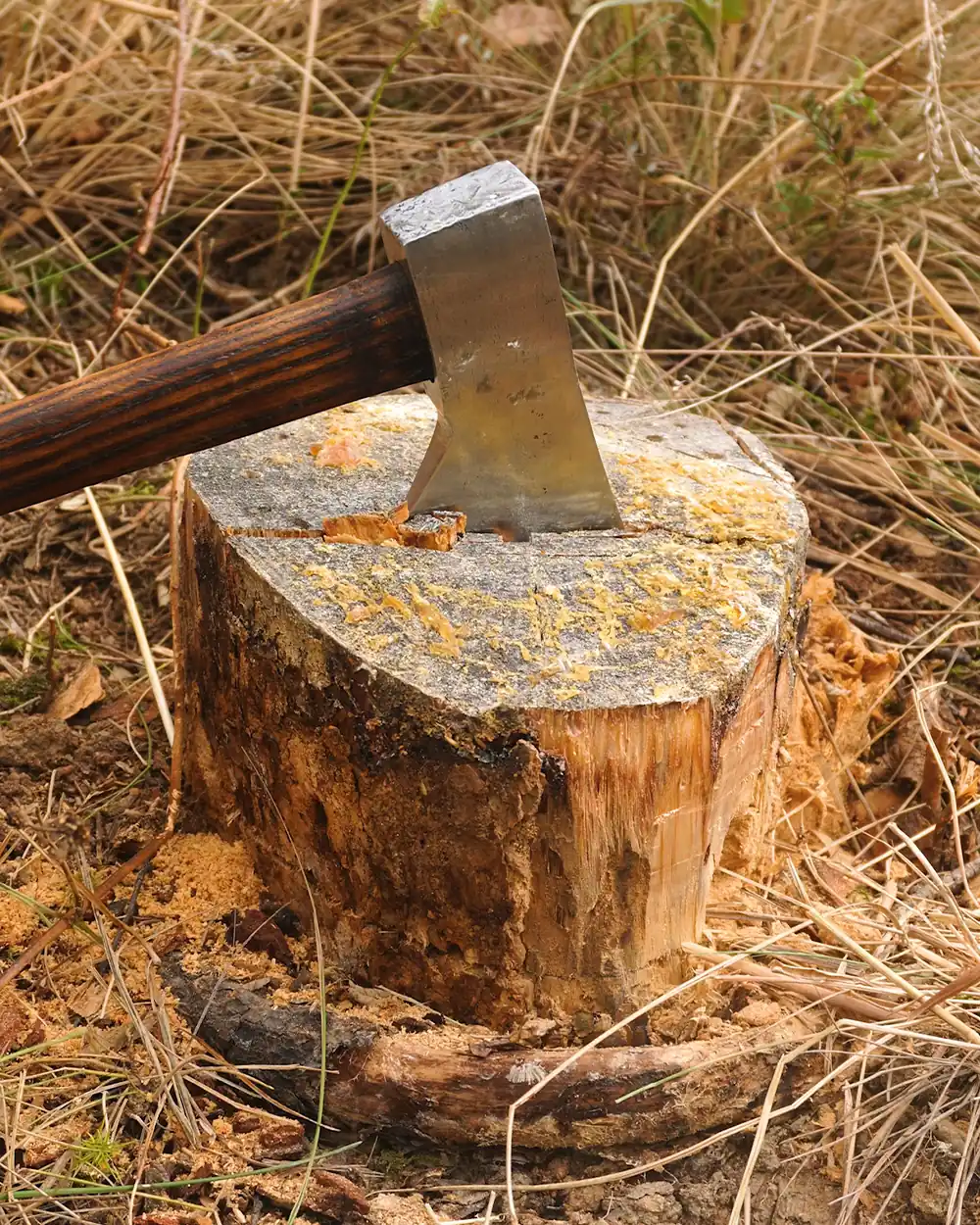
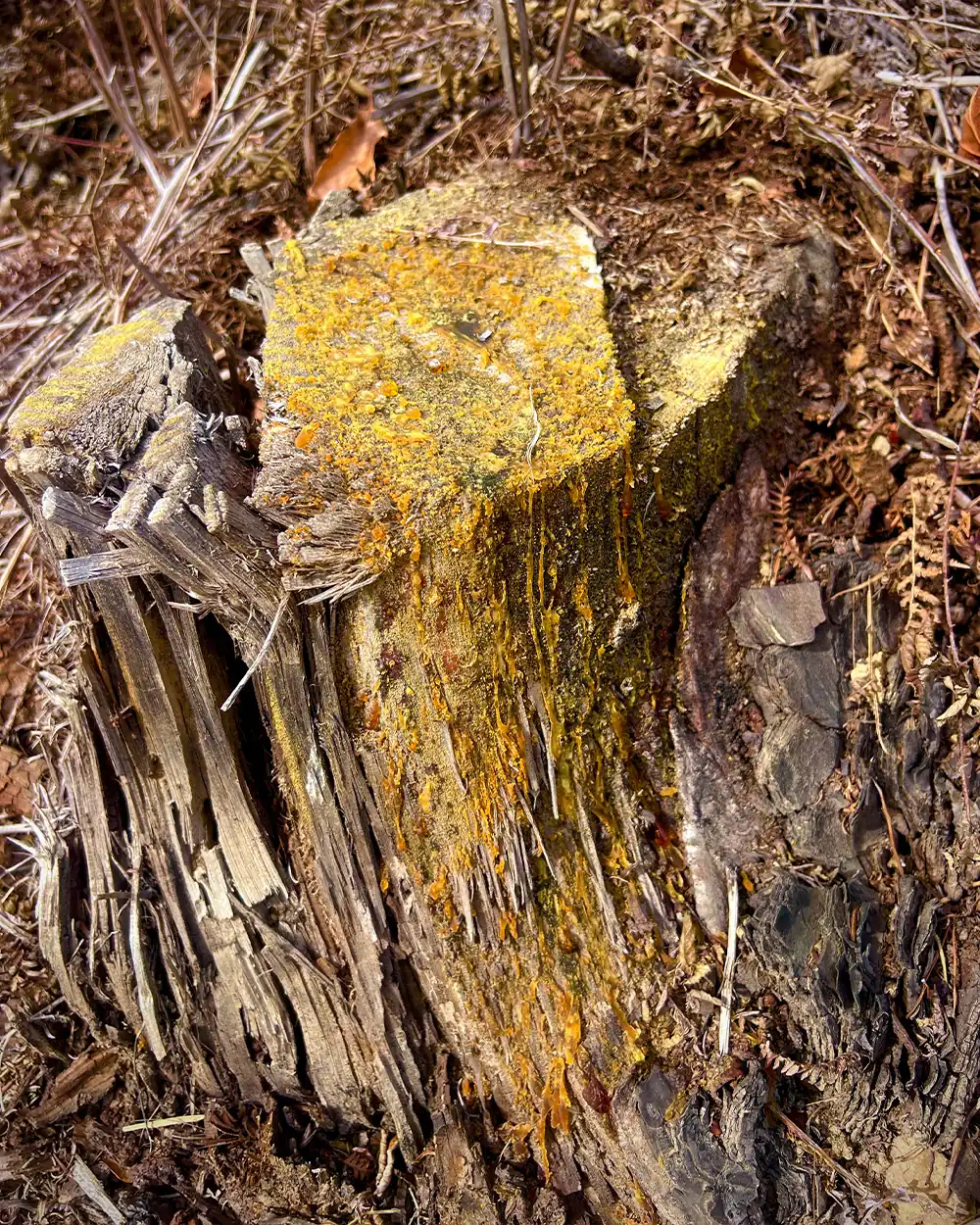
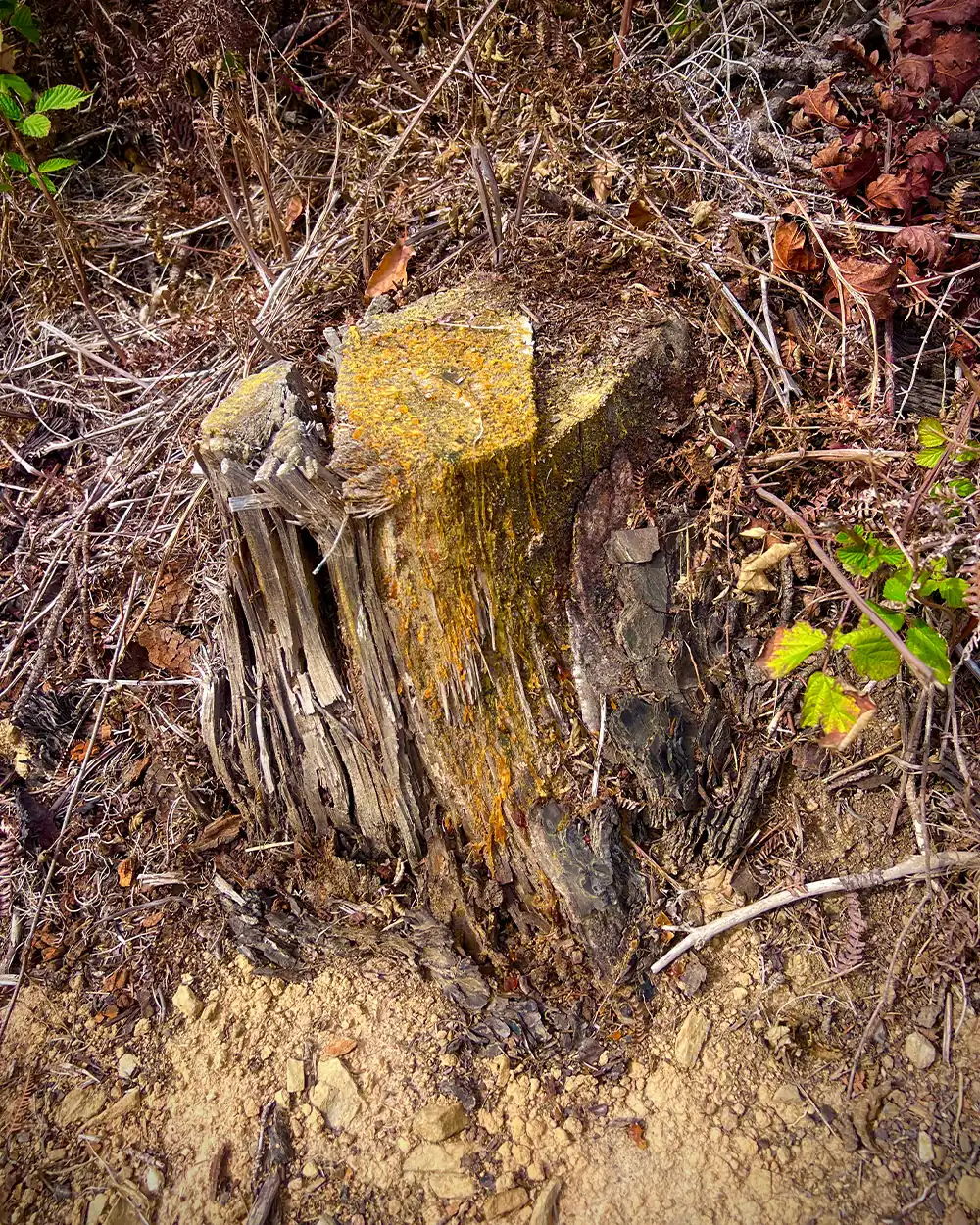
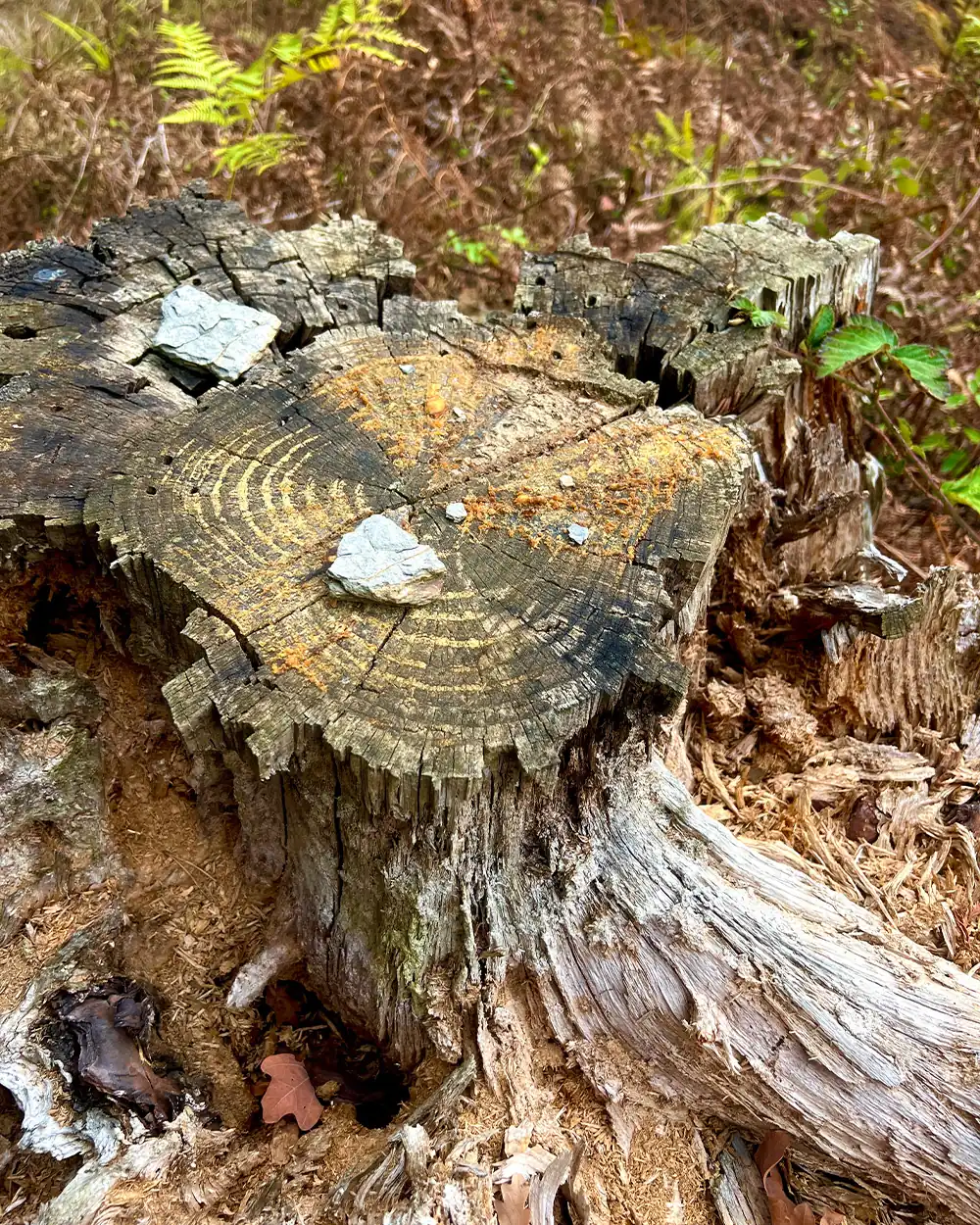
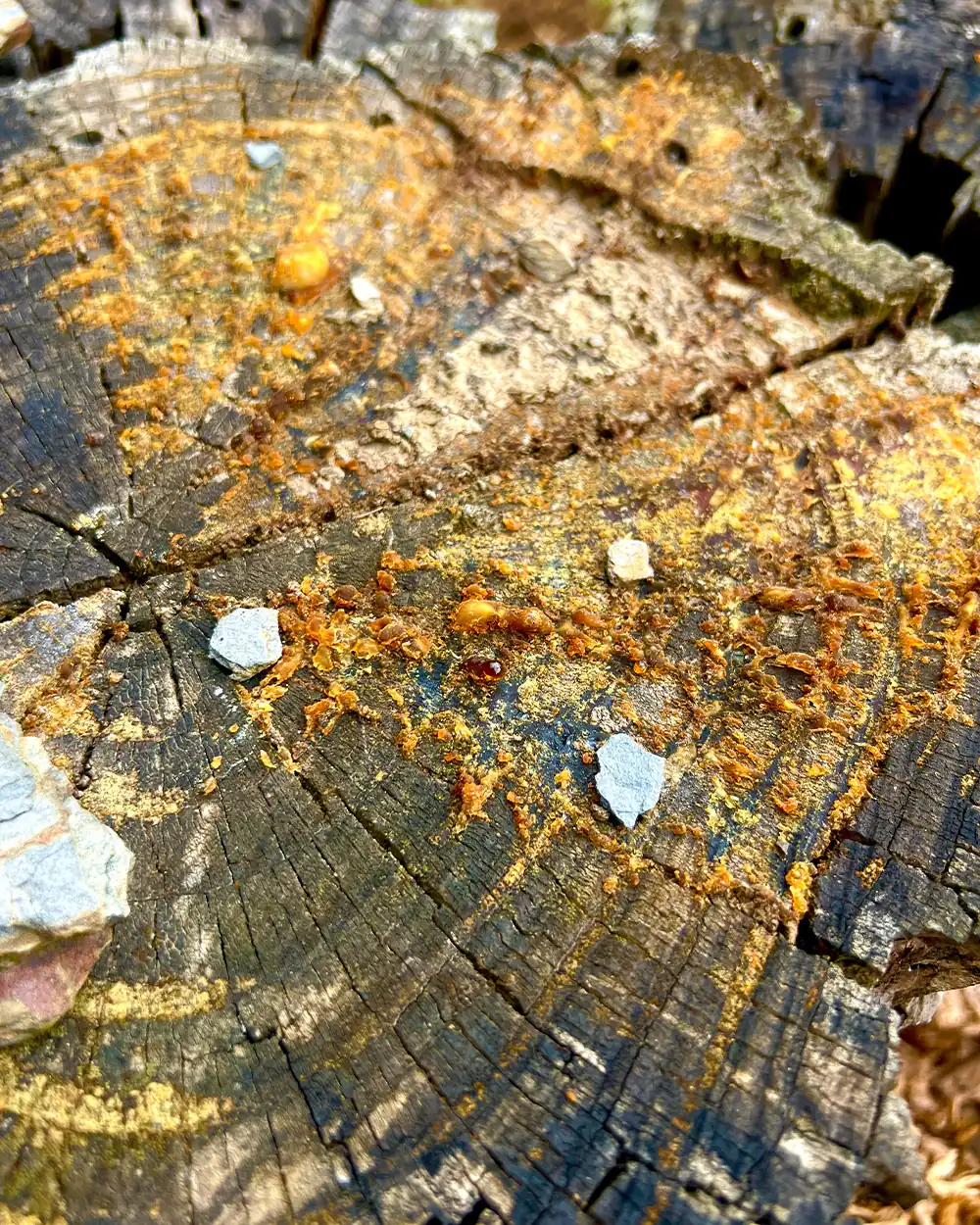
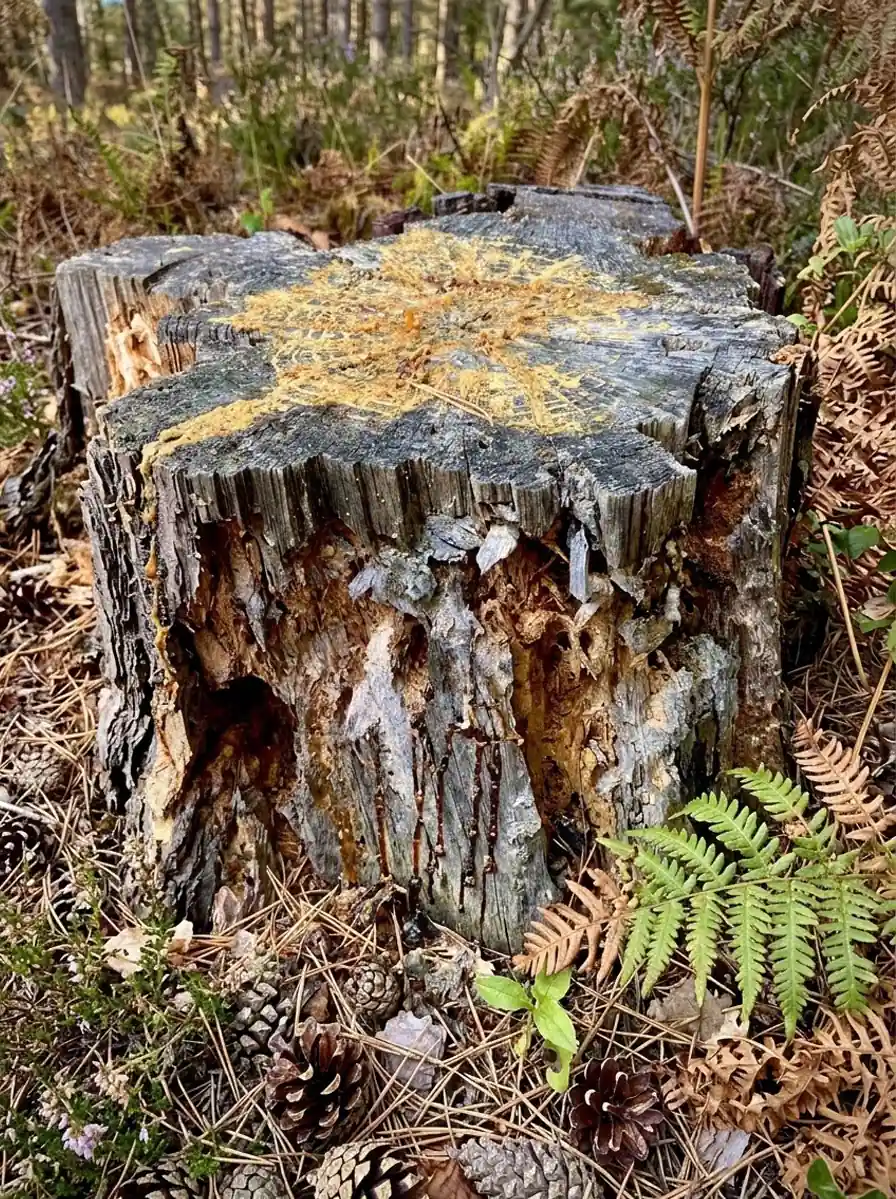
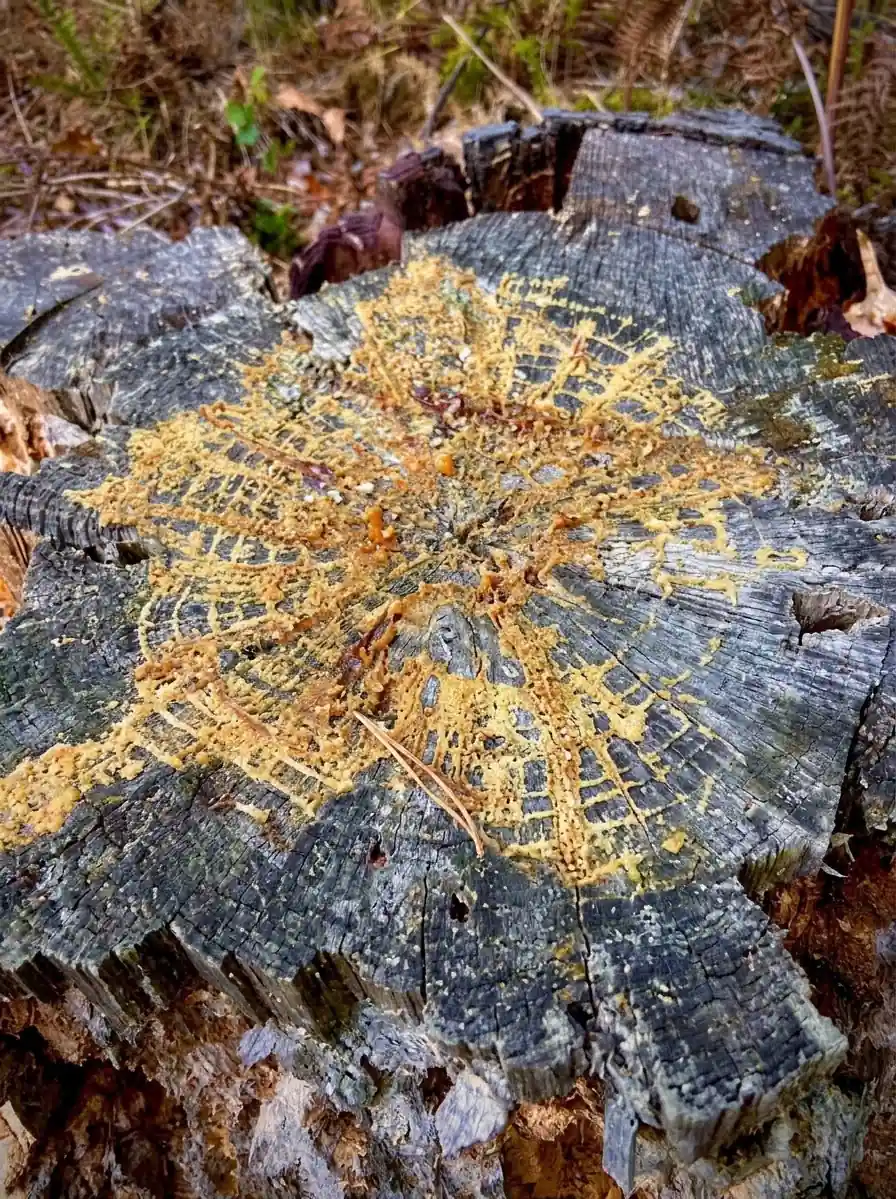
This one is pretty simple. You want to look for old stumps that have a lot of dry resin on the cut part. It looks like it bubbled out and hardened over time, sometimes almost black with age.
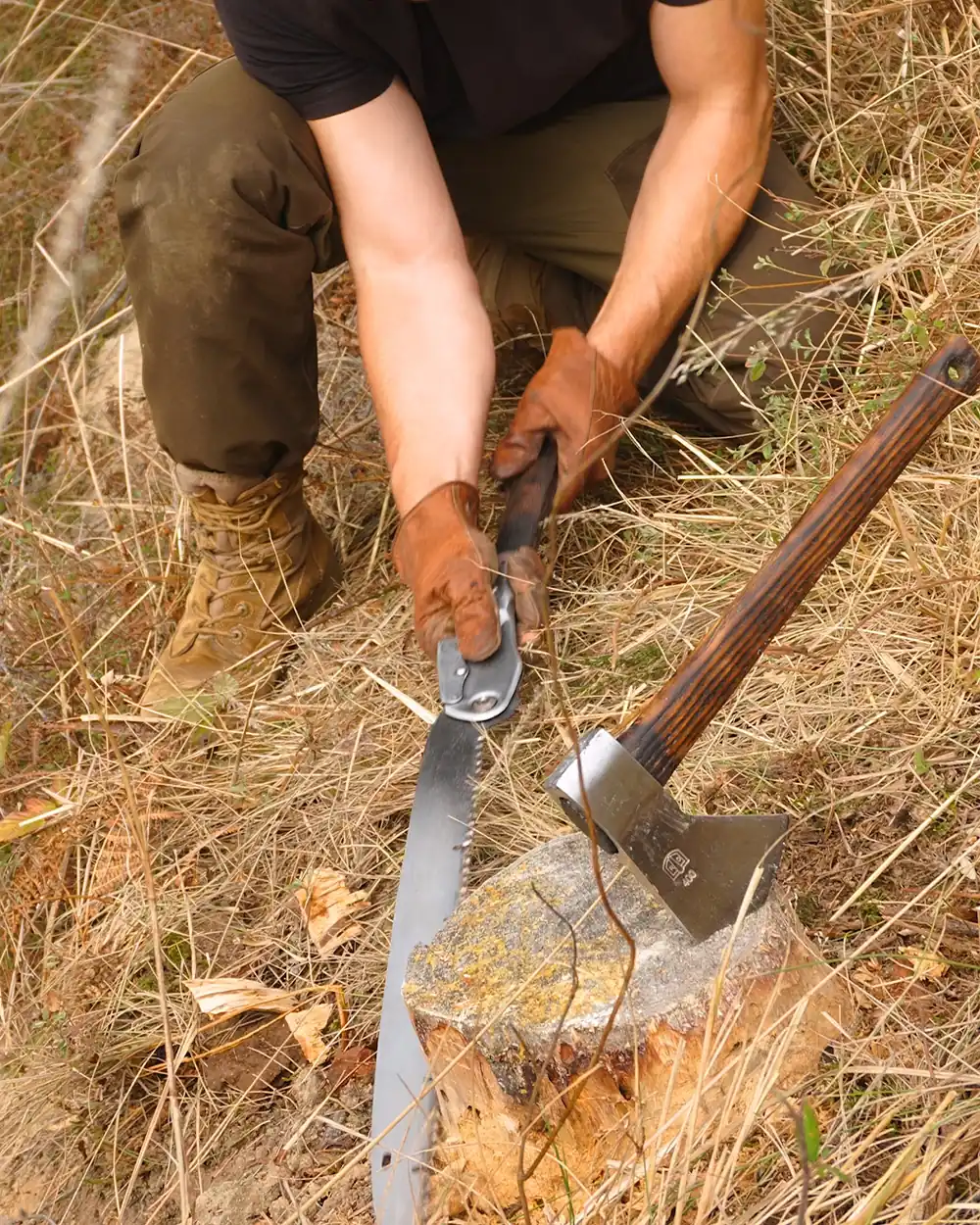
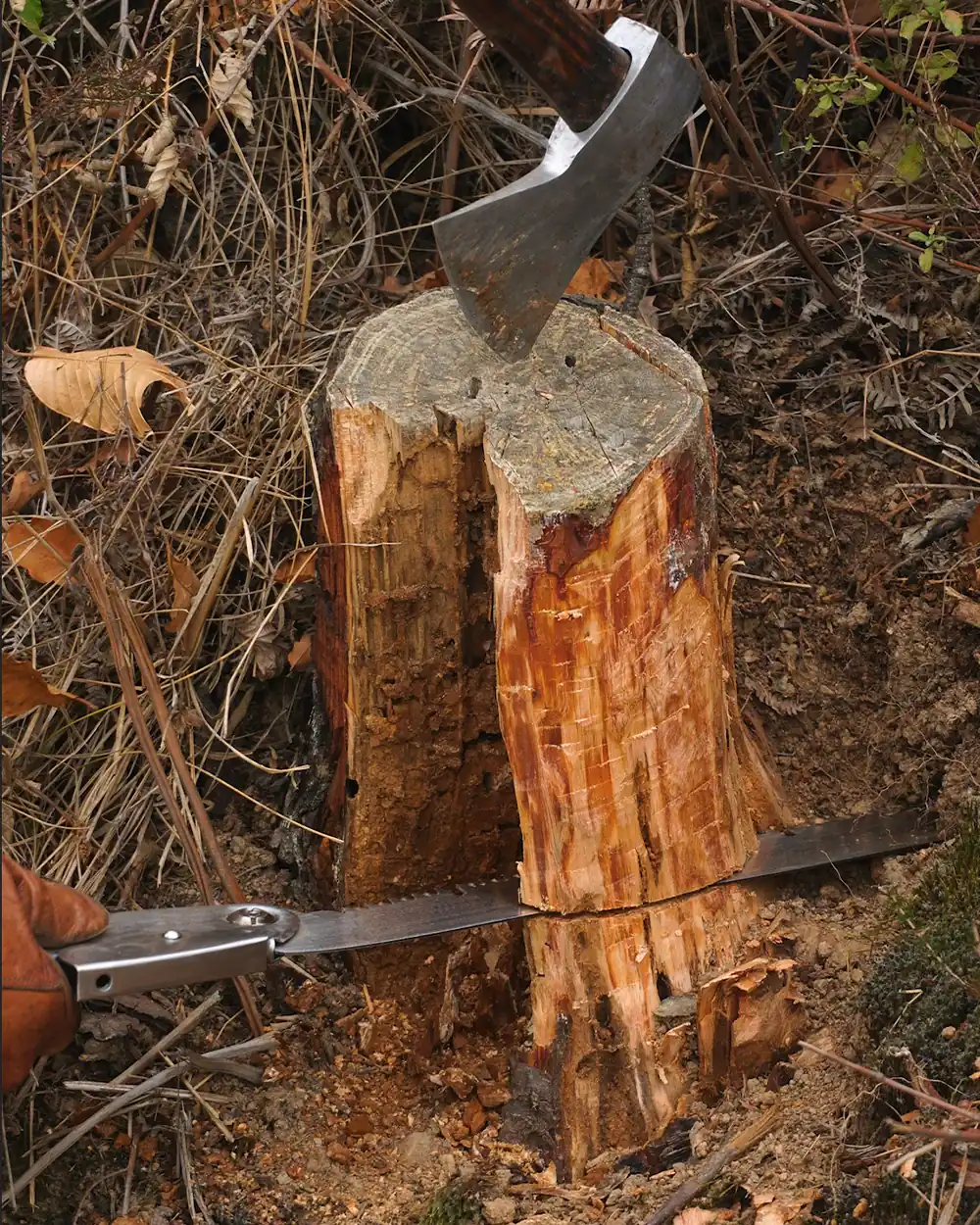
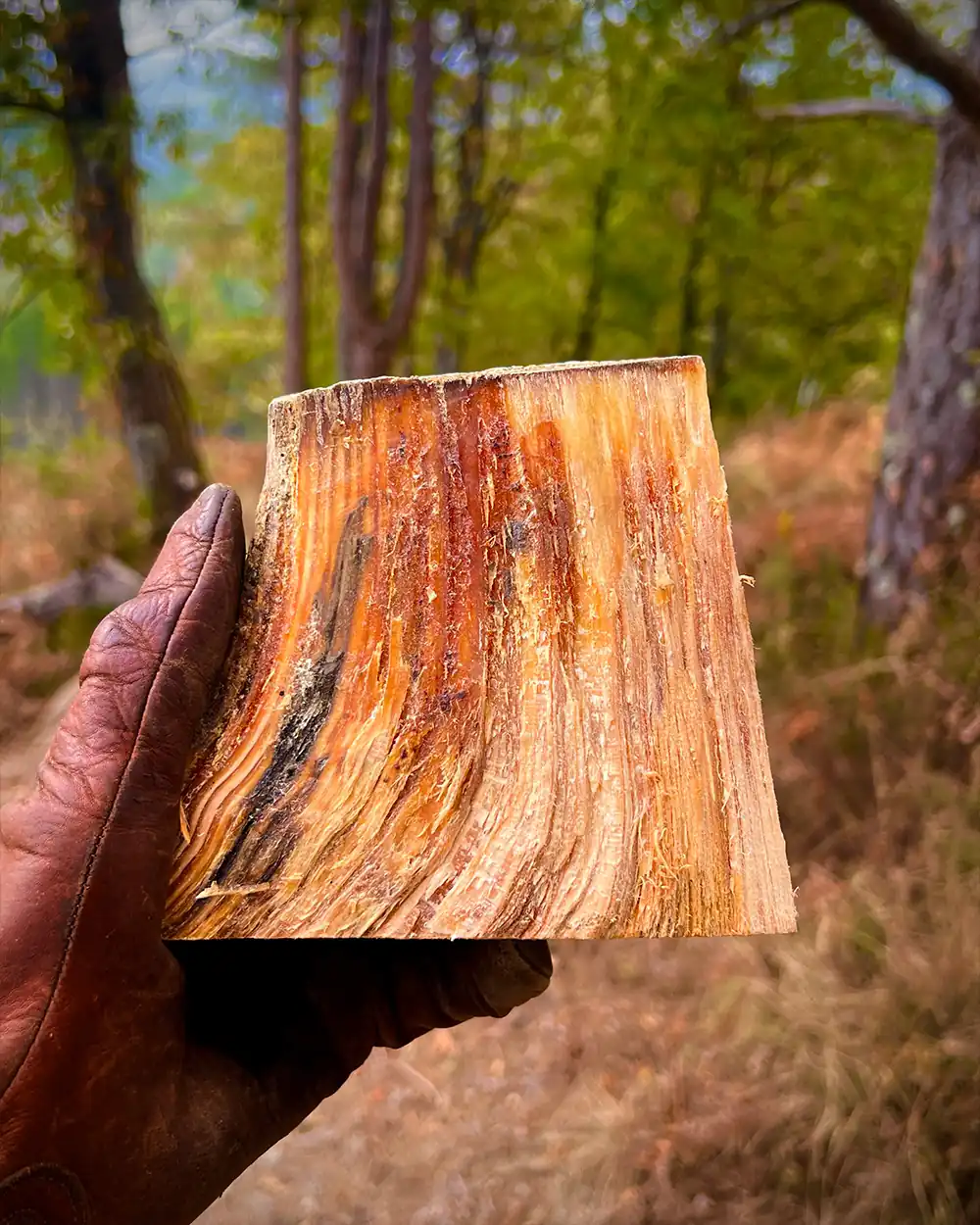
Once you find a stump with a lot of resin showing on top, peel the bark off one side and make a vertical cut with the axe to see what’s inside. If the fatwood looks good (dark and super saturated), follow the cut down to see where the fatwood ends. Clean up the area around it so you can work properly, and try to saw through the whole trunk from there. If you see a lot of resin on top, I can guarantee that stump is going to be loaded.
2. Cut Branches
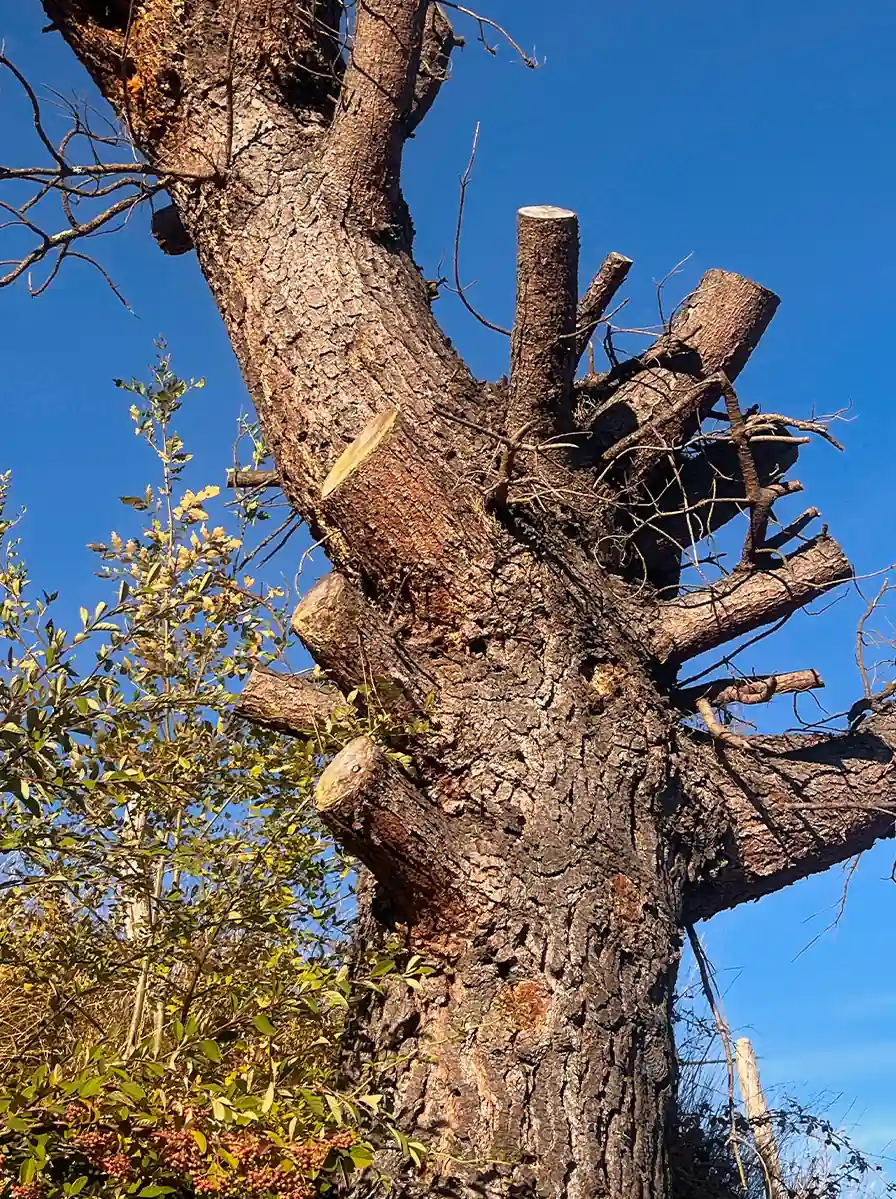
This one might be a bit less ethical, since we’re talking about living trees that have had branches cut off to clear paths, roads, and so on.
What we’re looking for here are branches that were cut years ago, but not right up against the main trunk, they were cut at a good distance from the main trunk, leaving a solid stub on the tree. It works the same as with the stumps, the more dry resin it has on the cut face, the more fatwood it’ll have inside, and the thicker the branch, the better. If that cut has a lot of hardened resin on the outside, that piece of branch is absolutely packed.
With this method it’s important not to cut right up against the main trunk, you should leave a bit of distance so the new wound can heal properly. This is the method I like the least, since we’re dealing with living trees, but I’ve done it several times over the years, and all the pines have healed perfectly.
3. Fallen Trees
This is my favorite method, and here it’s really important to do it in a forest with genuinely old pines, the older and bigger the trees, the better.
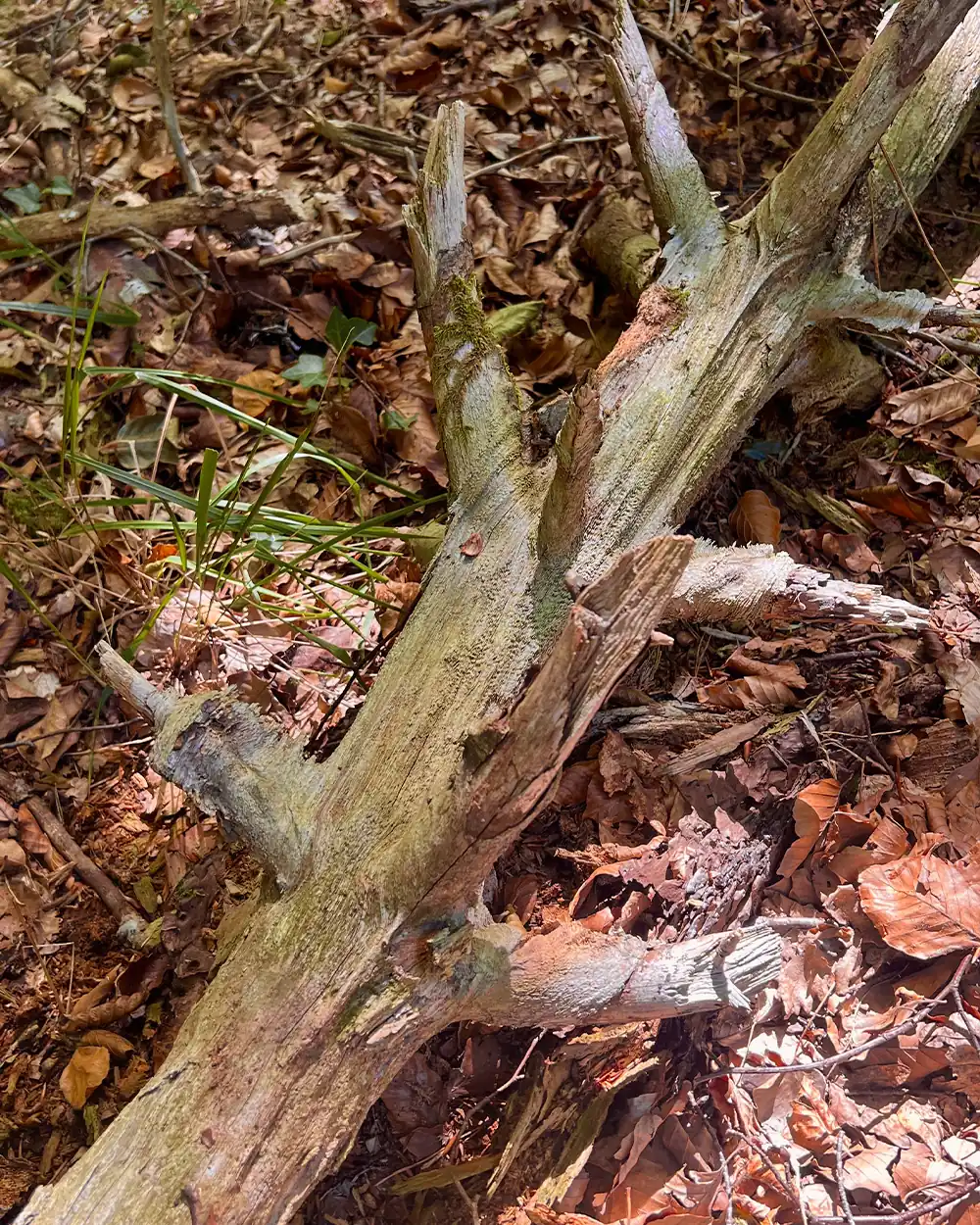
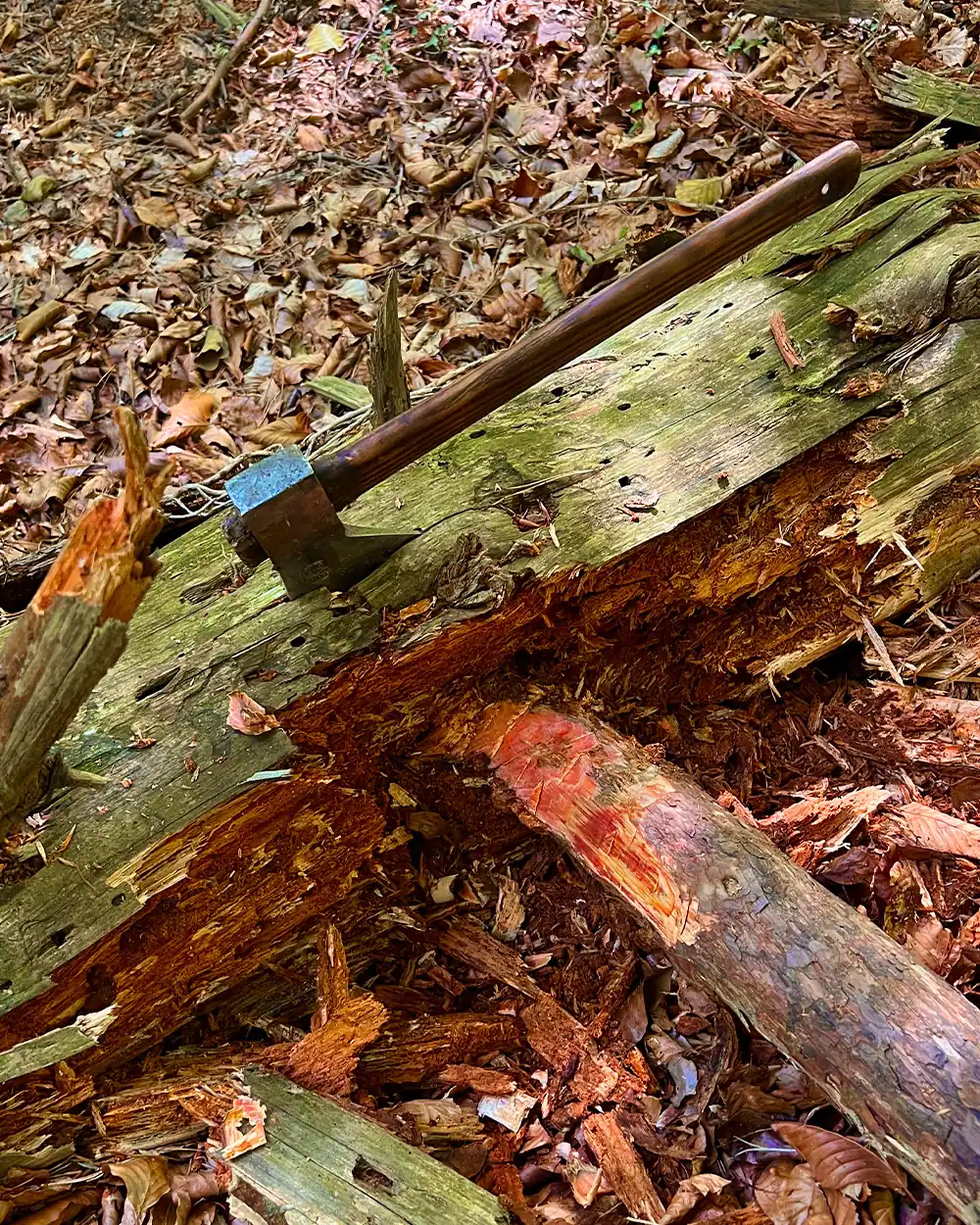
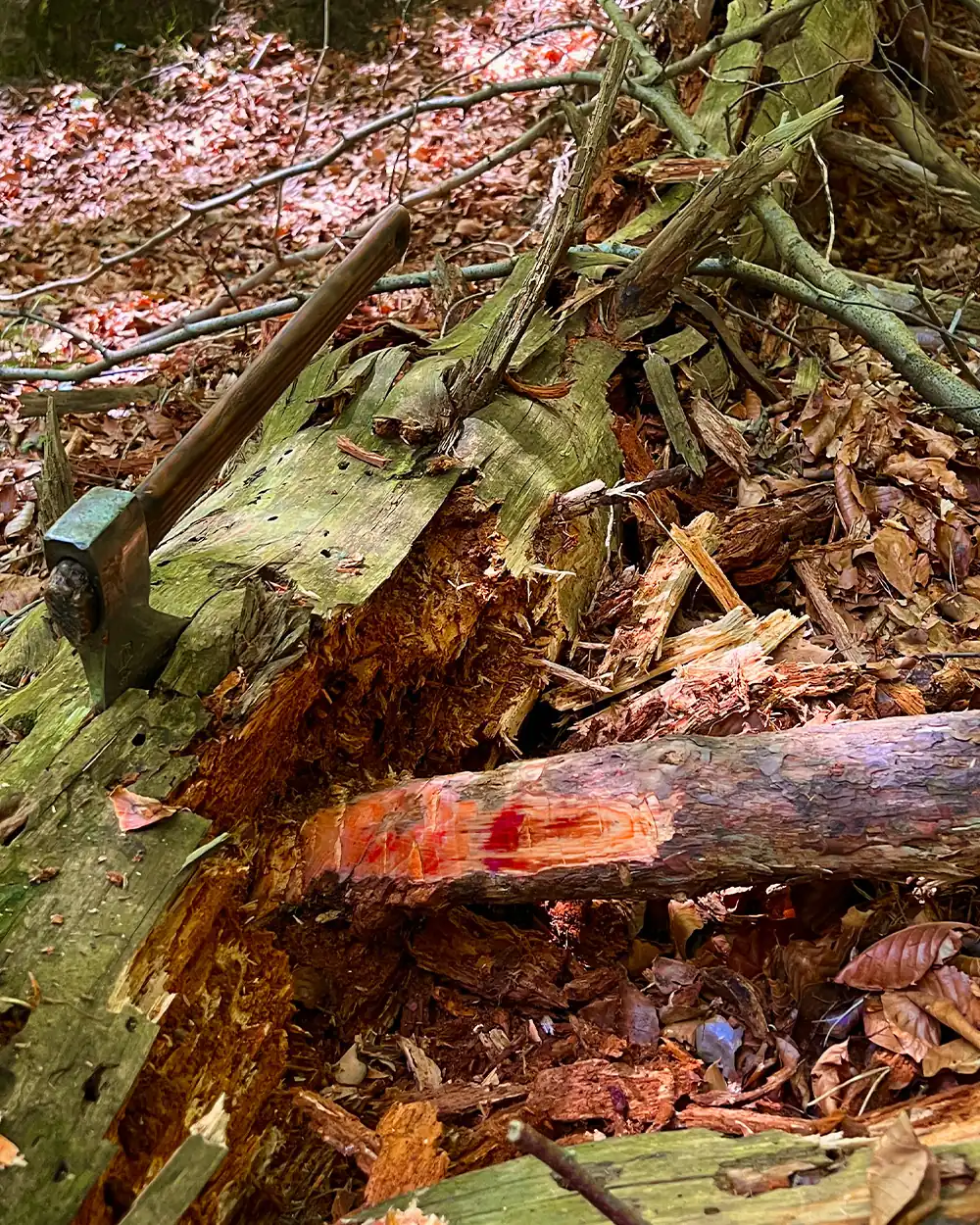
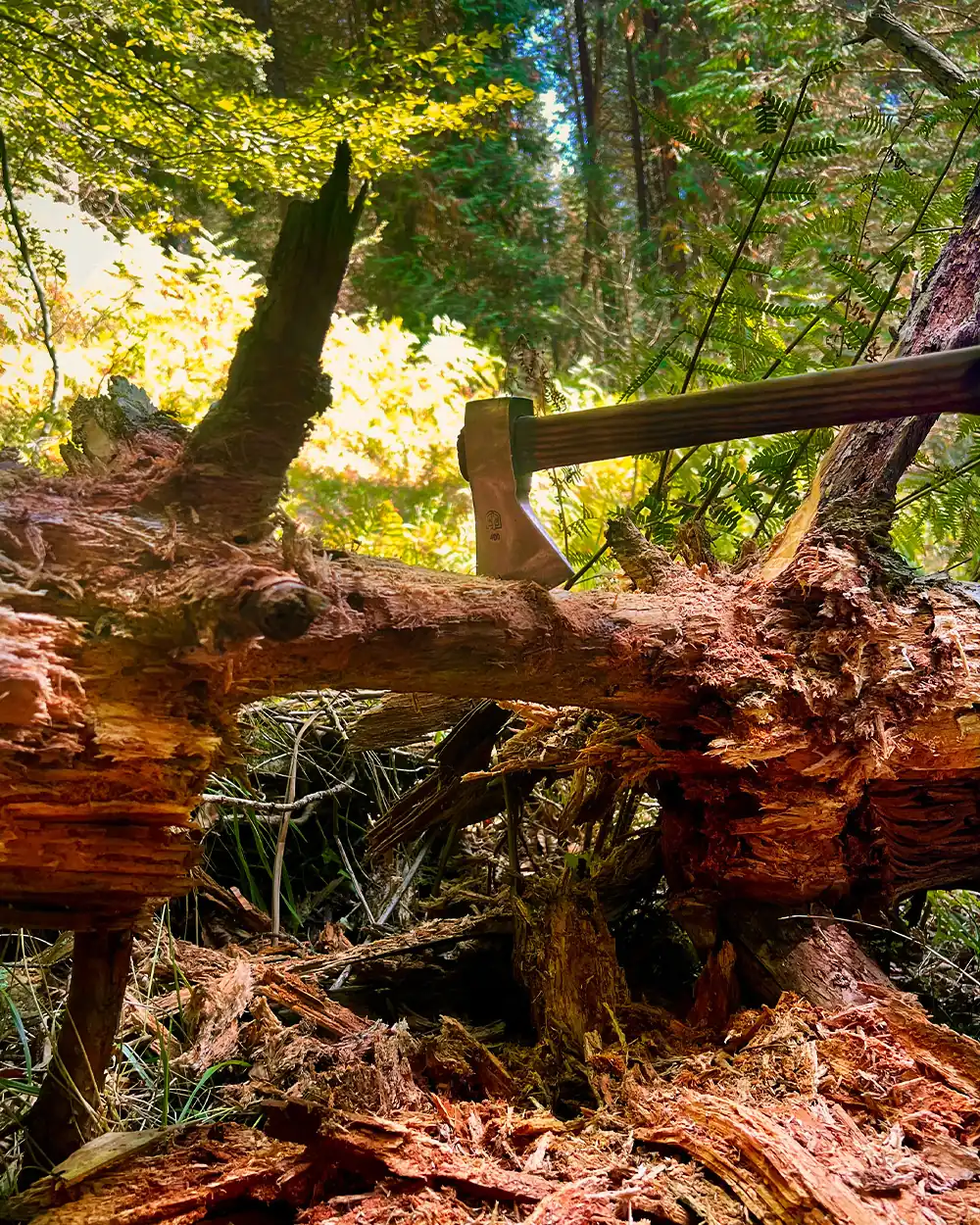
You need to look for fallen trees so old and decomposed that only the heartwood is left. There can still be rotten wood, and even bark around it, but it should break apart easily with an axe, knife, or even your hand, until you reach the hard core.
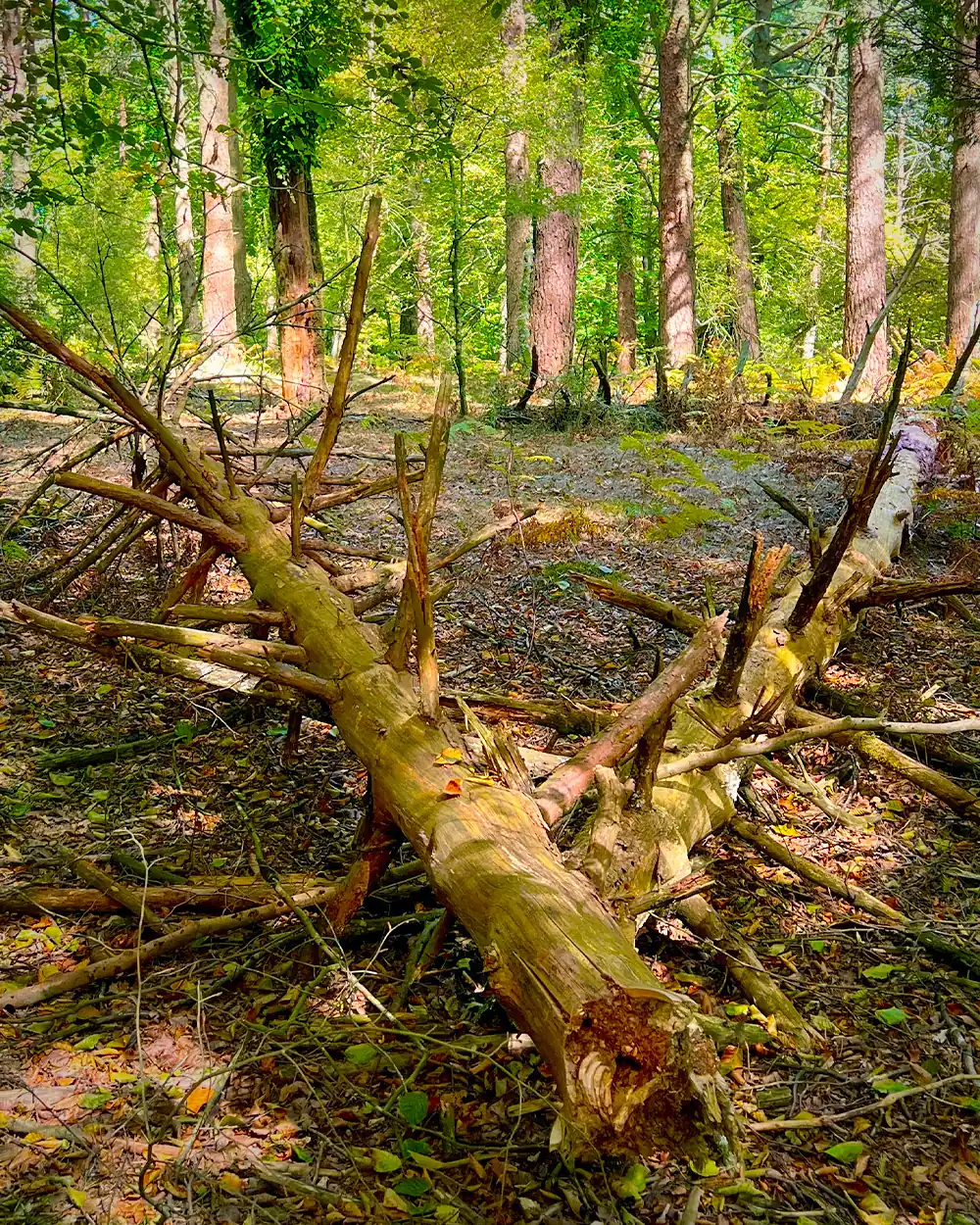
Sometimes you’ll come across a fallen pine that looks like a normal tree at first, but if you look closely, it has no bark, and the branches are almost conical and too short. What you’re really seeing is its skeleton. The whole tree has rotted away and disappeared, except for the heartwood, which is still intact because the fatwood inside it keeps moisture out and doesn’t even rot. That core should be extremely hard, check it by hitting it with the back of the axe and listening, it should sound really solid and hard.
Basically, what you’re really looking for is the skeleton of the pine, the hard, resin soaked heart that’s still intact long after everything else around it has rotted away.
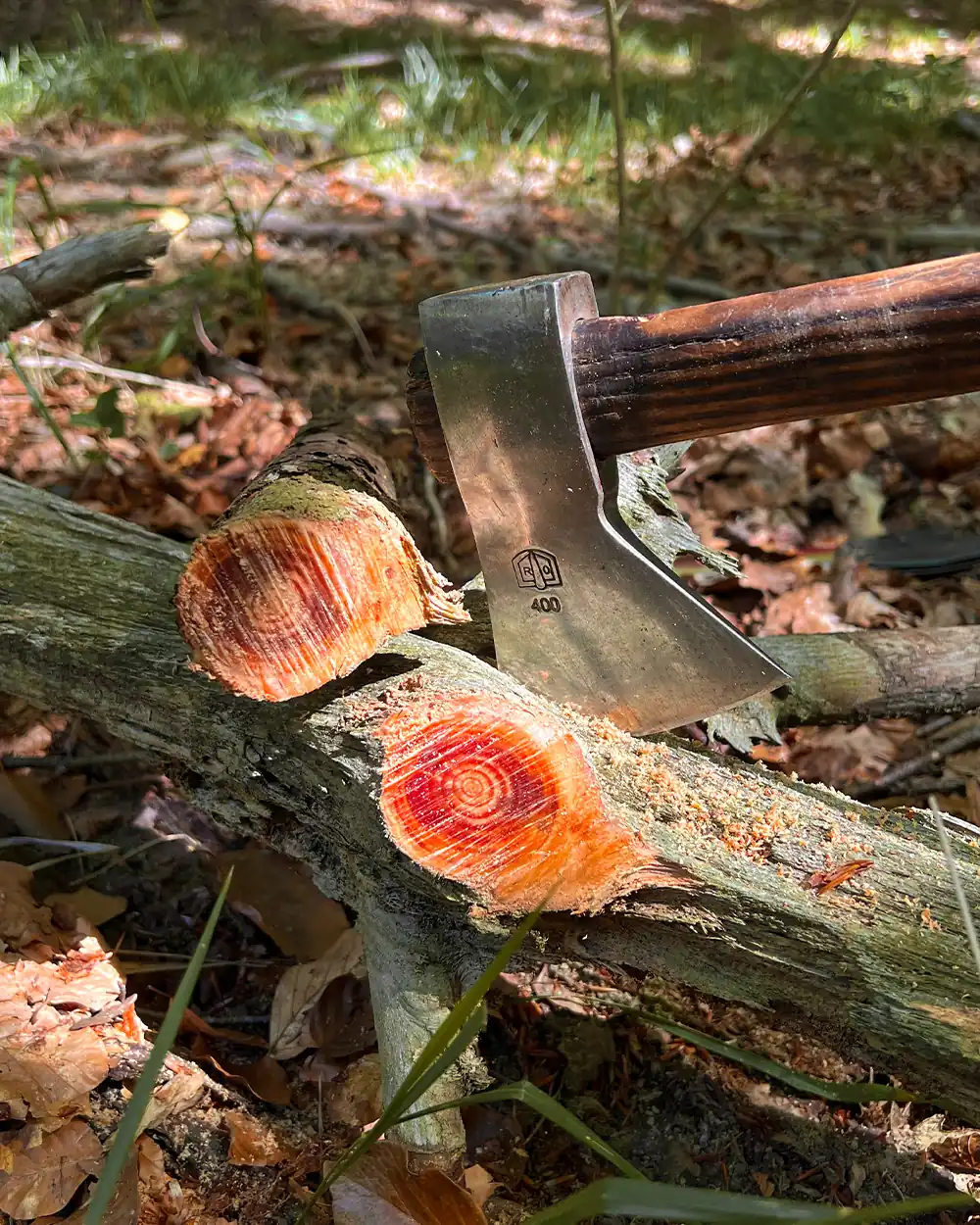
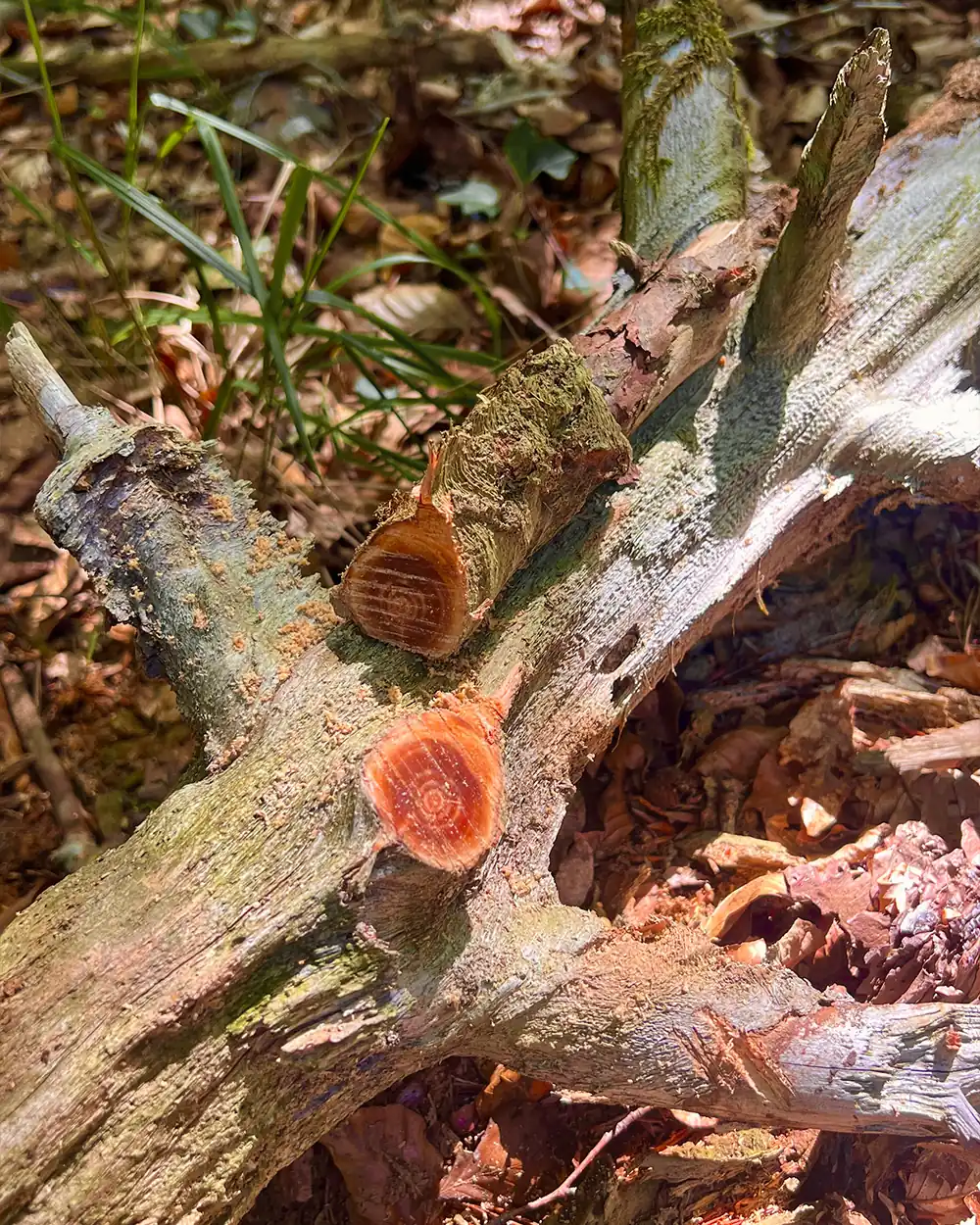
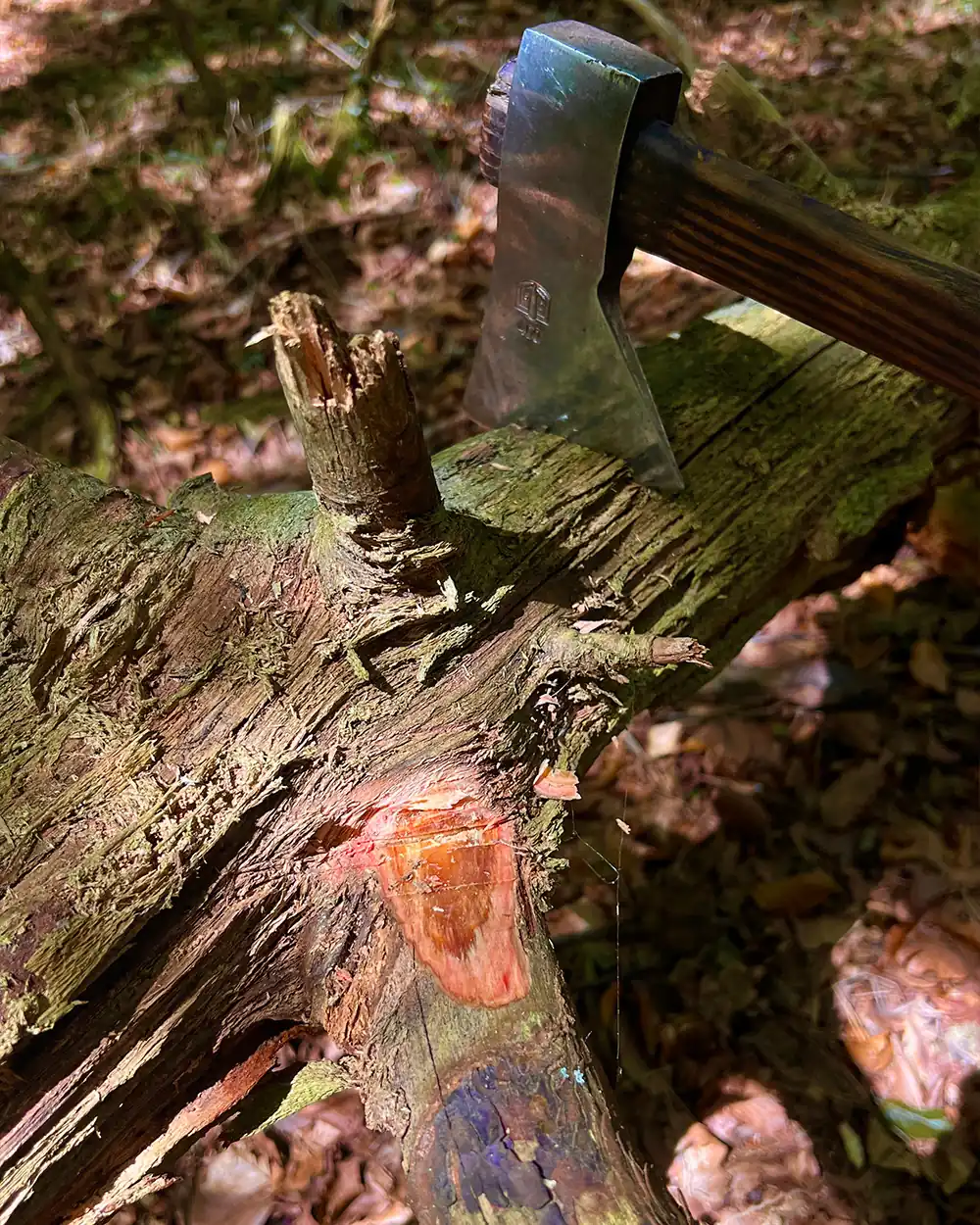
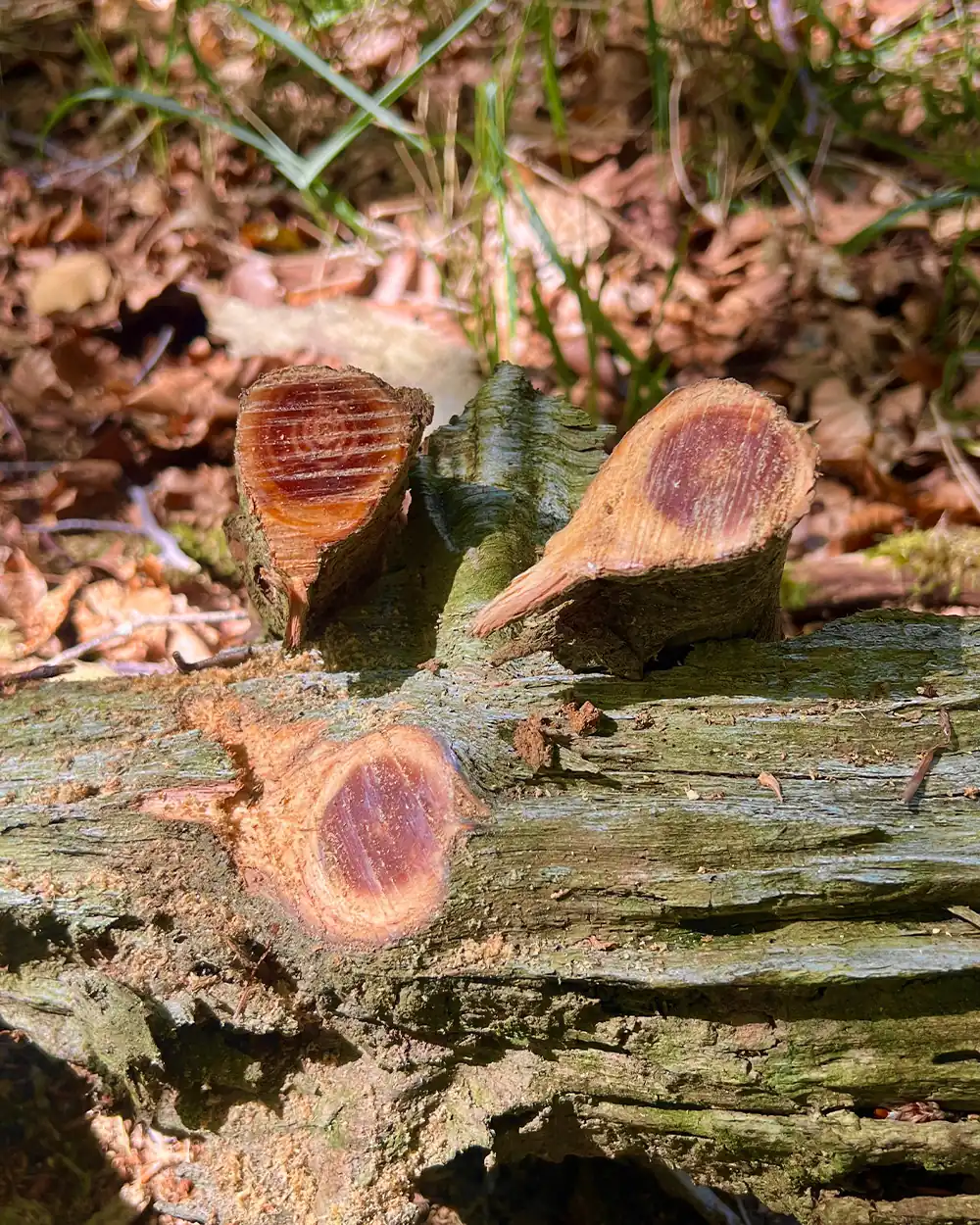
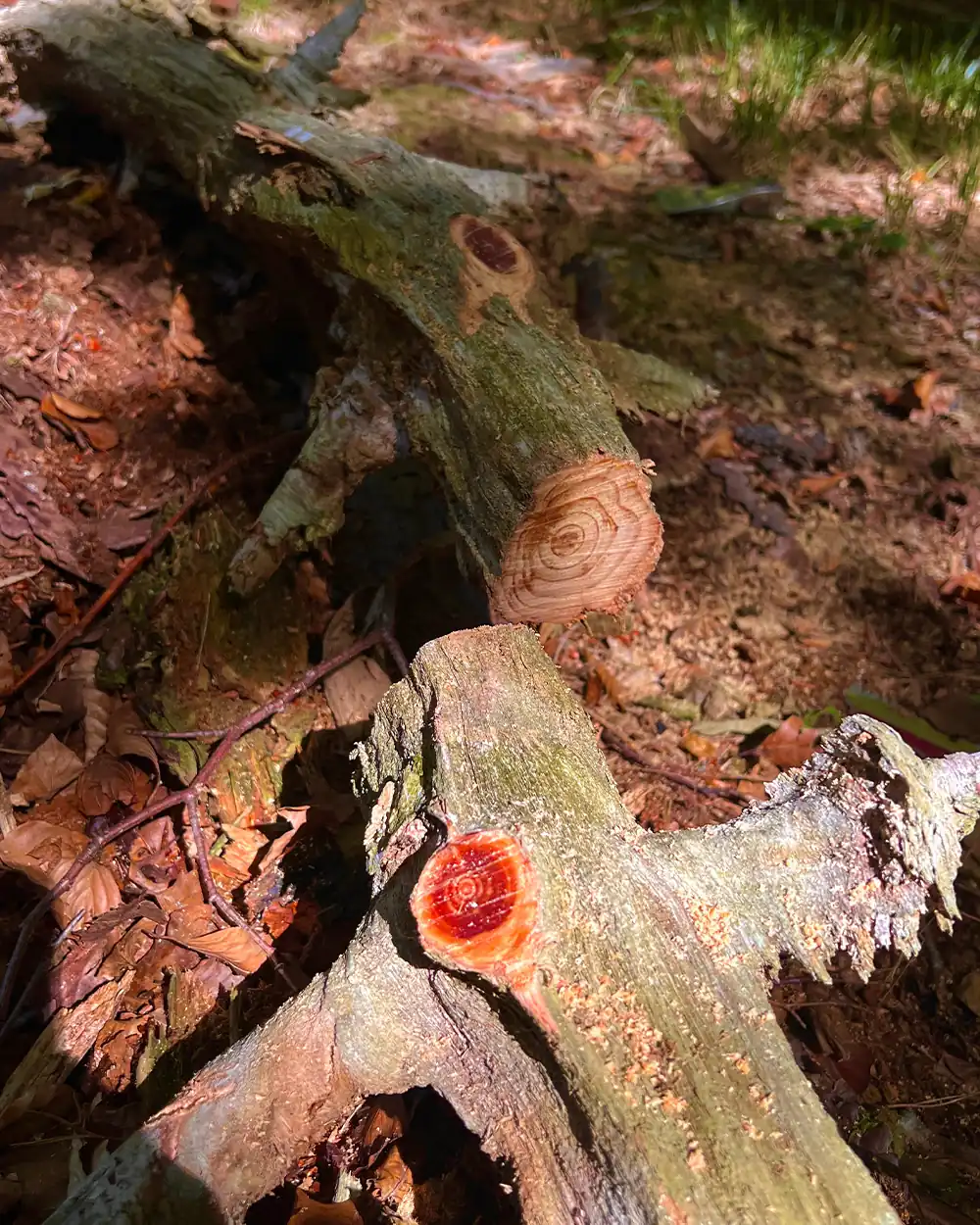
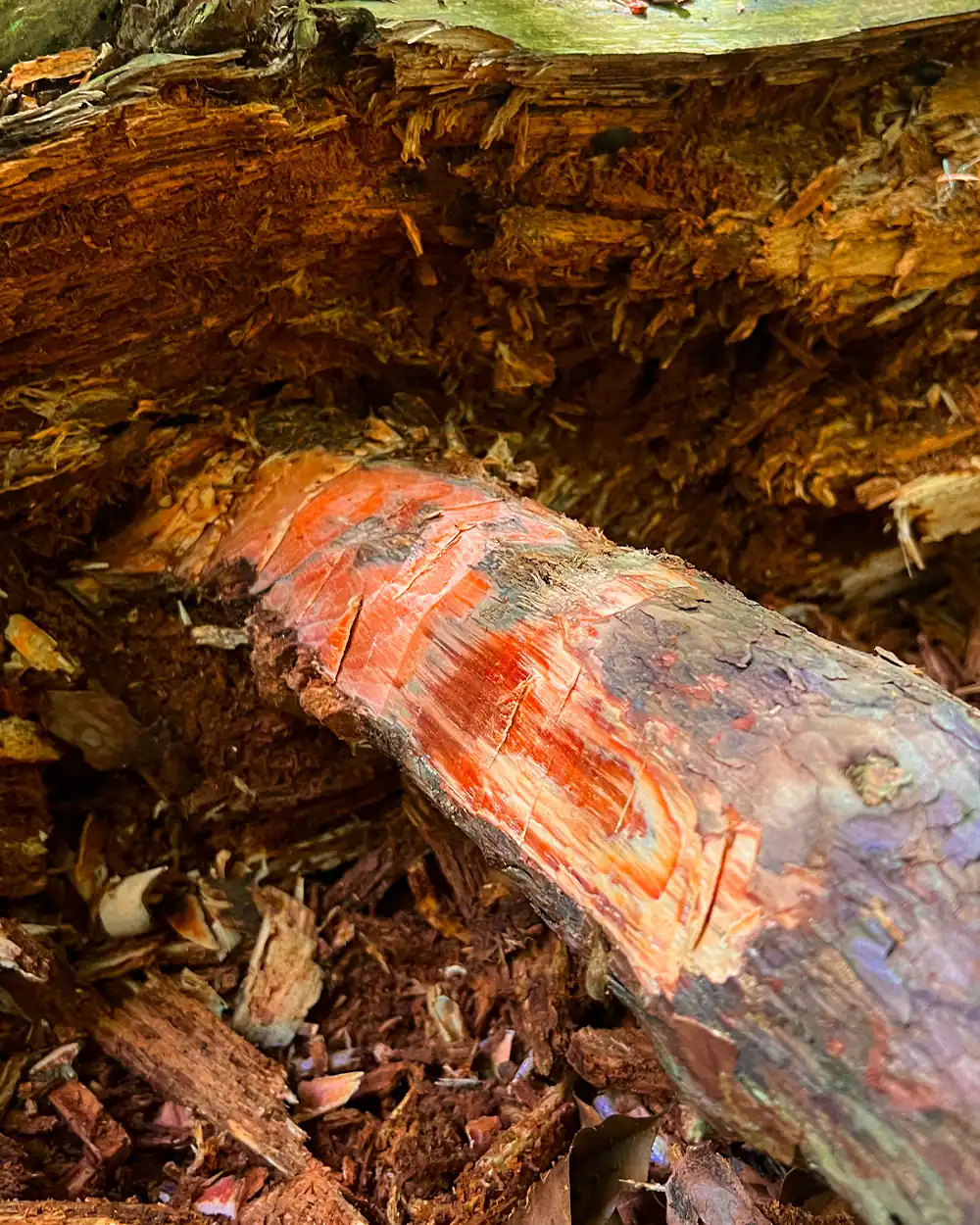
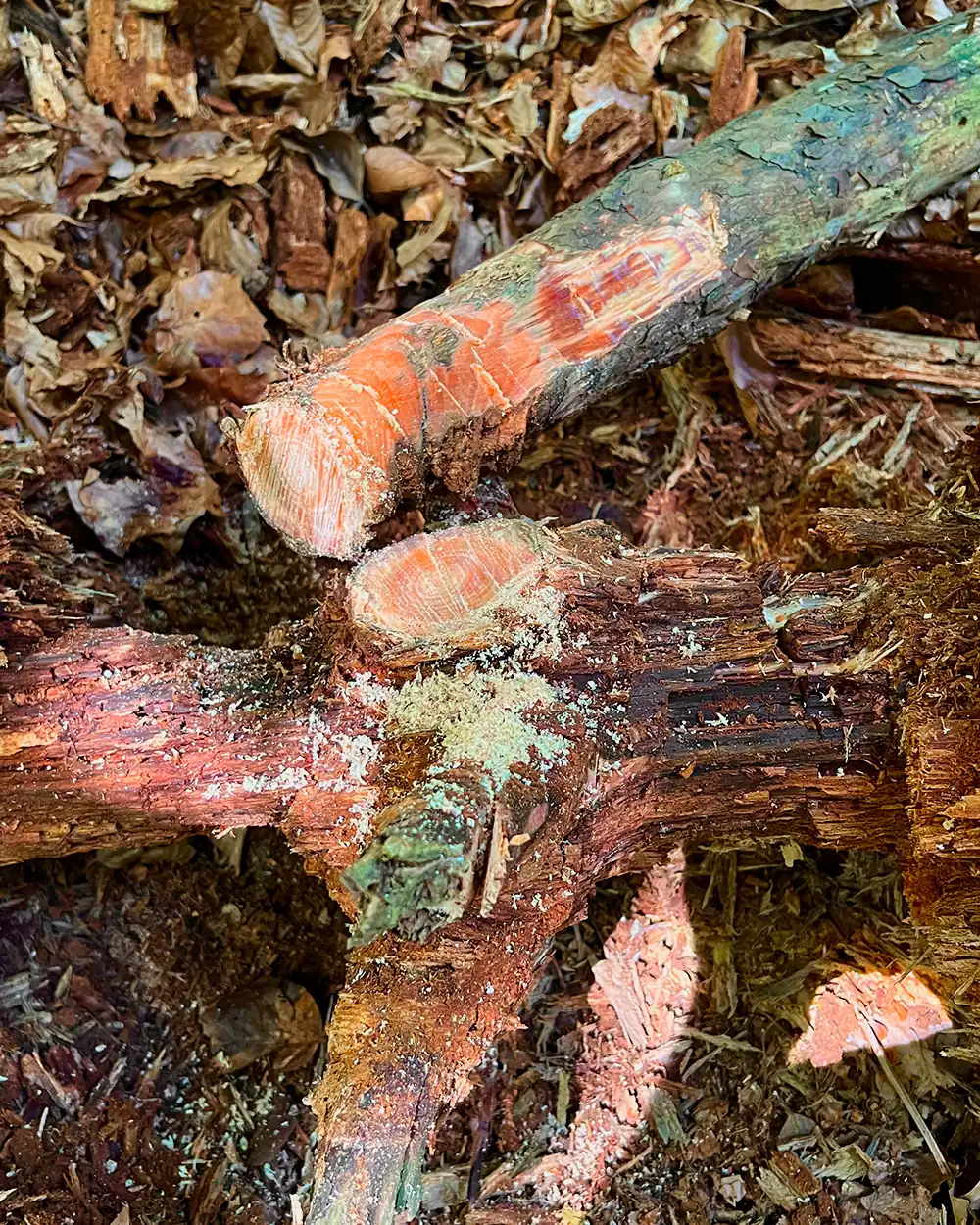
What I like to do once I’ve found a good tree is this: first, find the thickest branch. In general, the closer to the base, the better. Give it a few good hits with the back of the axe and listen, it should sound really solid. Then step on it as hard as you can, it shouldn’t barely move. If that all checks out, clear away all the rotten wood around the branch until you reach the core, where the branch meets the trunk. Make a cut with your saw right where they meet, as close to the main trunk as possible. The part where the branch and trunk meet should be completely saturated with dark fatwood, if it’s not, find another branch. Chances are the first quarter of the branch (or more) is pure fatwood, and the closer to the trunk, the more you’ll get.
Cut at a good distance out to see where the fatwood ends. Once you’ve found where it starts and stops, clean up the whole outside, bark and all, until you’re left with just fatwood. I bring the branches home like that, already cleaned up, nothing but fatwood.
With practice you’ll start recognizing the good trees, and if you see all the branches are super good quality, give a test cut with the axe to the main trunk (as close to the roots as possible), some of them will even have the whole lower part of the main trunk turned into pure fatwood.
Sometimes, from the roots of a really big pine, a small tree grows out. It can look like a separate tree, but it’s actually the same one, it’s like a “branch” that grew out of the root and turned into its own small tree. If you find one of these dead and standing, especially right next to a big healthy tree, it’s worth checking too. It’s happened to me several times that it was fatwood from top to bottom. What happens is the small tree gets injured somehow, for example a branch falls on it and breaks it, and the big tree pumps a ton of resin trying to heal it. Sometimes it doesn’t work and the small tree ends up dying, but by then its whole interior is completely saturated.
What I like to do is just go around looking for all these signs. If I see a stump with resin on top, I cut a corner to check it. If I see a branch with a stub sticking out and resin on the cut face, I check that too. If I see a decomposing tree or a skeleton, I hit it with the back of the axe and listen, and if I come across one of those small trees growing out of the roots of a bigger one, dead and standing, I always take a look, since those have surprised me more than once. If something sounds really solid, I make a small cut on the thickest branch to check, and if the outer part is already fatwood, that’s when I start cutting for real.
That’s really the core of how to find fatwood once you’re out there, recognizing which signs are worth a closer look.
Tools I Use to Find and Harvest Fatwood
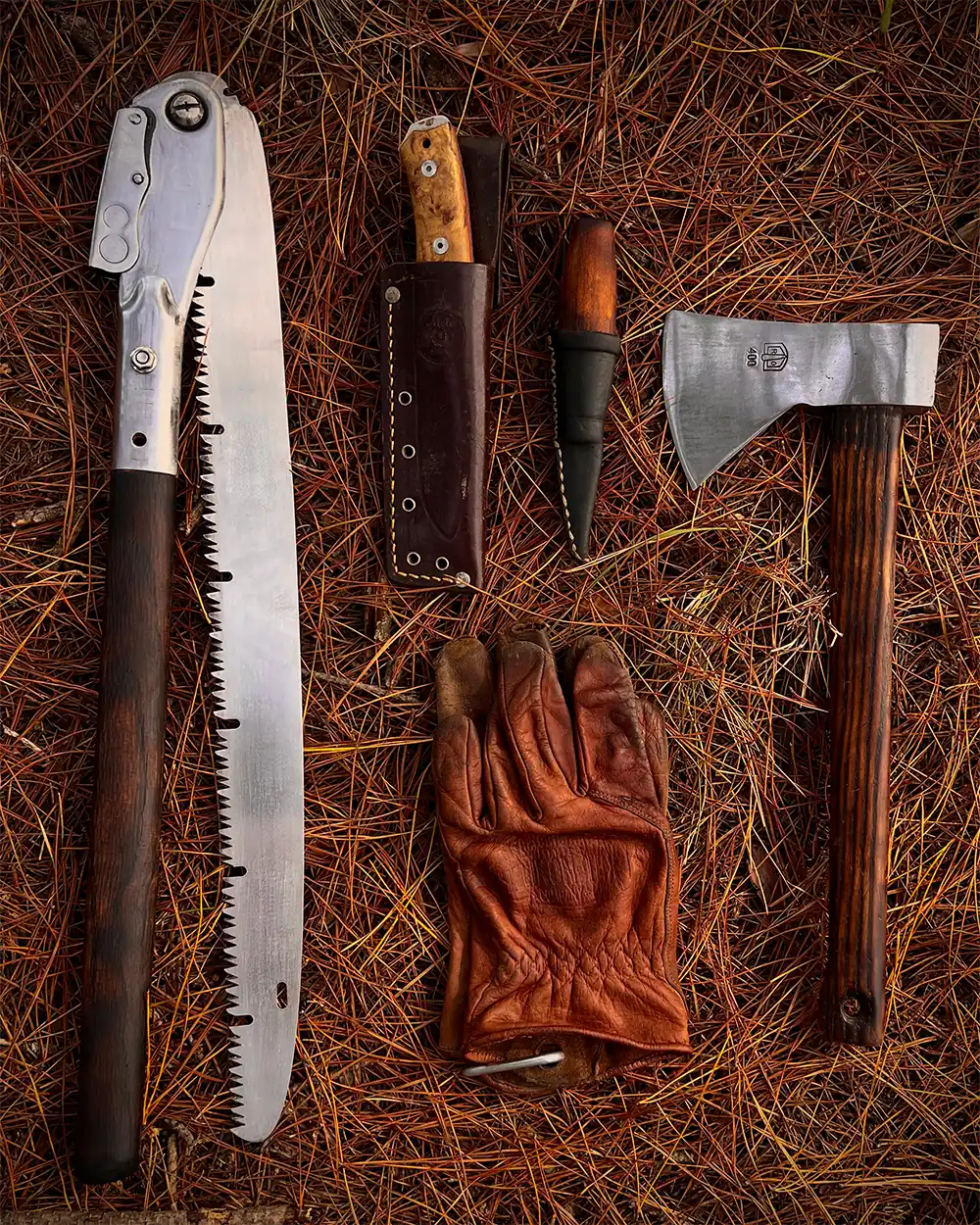
You don’t need a lot of gear to find fatwood, but having the right tools makes the whole process much easier. These are the tools I take with me when I go out looking for fatwood.
Large folding saw. This is the tool I use for cutting branches, stumps, fallen trunks, and pretty much anything else I need to cut. I prefer a large saw because it makes cutting much easier and allows me to handle pieces of very different sizes that would be difficult to cut with a smaller one. It is fast, gives me a clean cut, and folds down small enough to carry easily in my backpack.
Hatchet. I use it to make small cuts into the sides of branches and trunks that look promising, just enough to see what’s inside. It’s also very useful for removing bark and rotten wood to expose the hard heartwood underneath. I also use it for splitting pieces once they have been cut with the saw. The back of the axe head is useful too. I use it to tap on trunks and branches and listen to the sound. A hard, solid sound is usually a good sign.
Small hoe (optional). Not essential, but handy for clearing soil, roots and debris around old stumps. Once you find a promising stump, being able to dig around it makes it much easier to follow the fatwood down and get a clean cut with the saw.
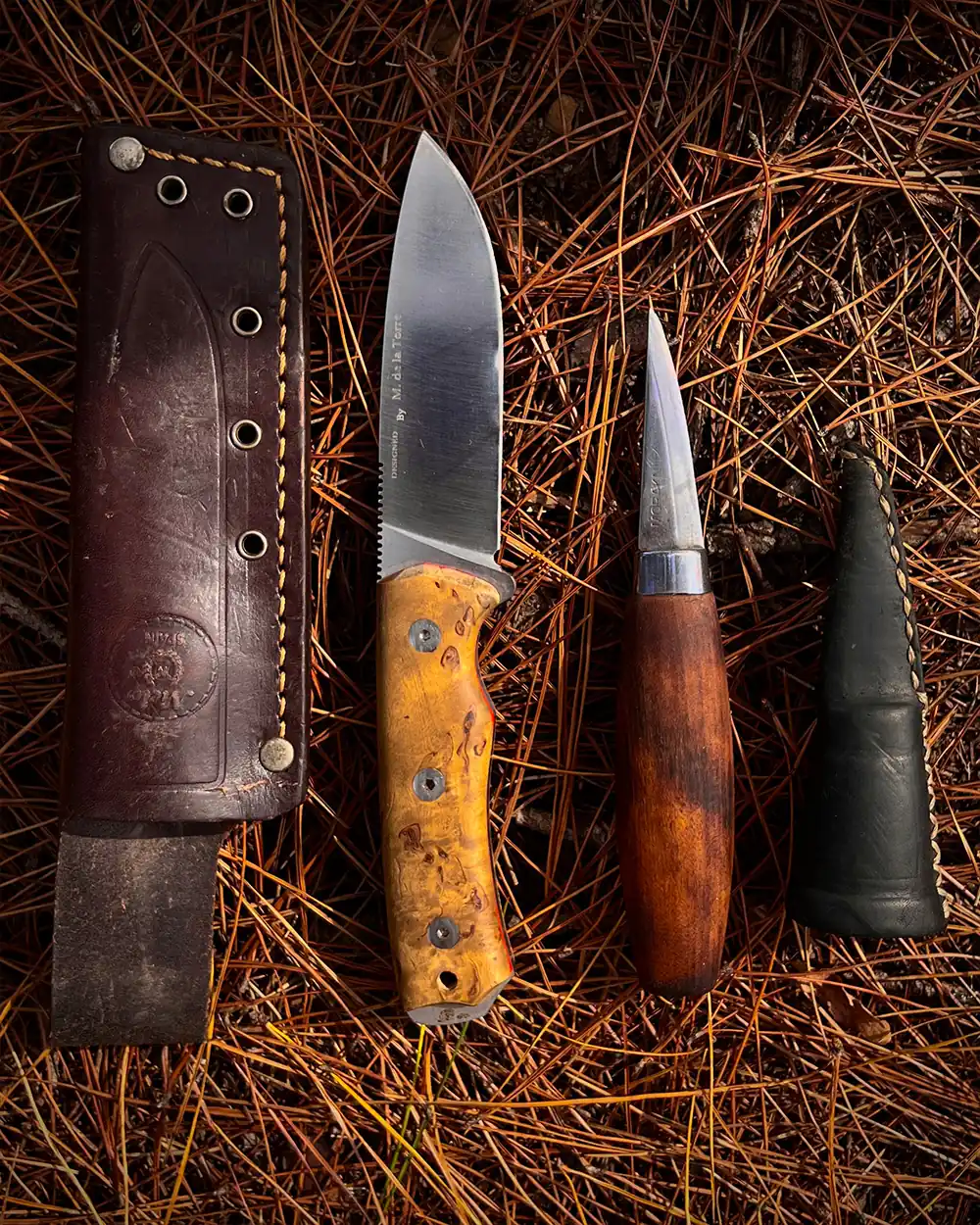
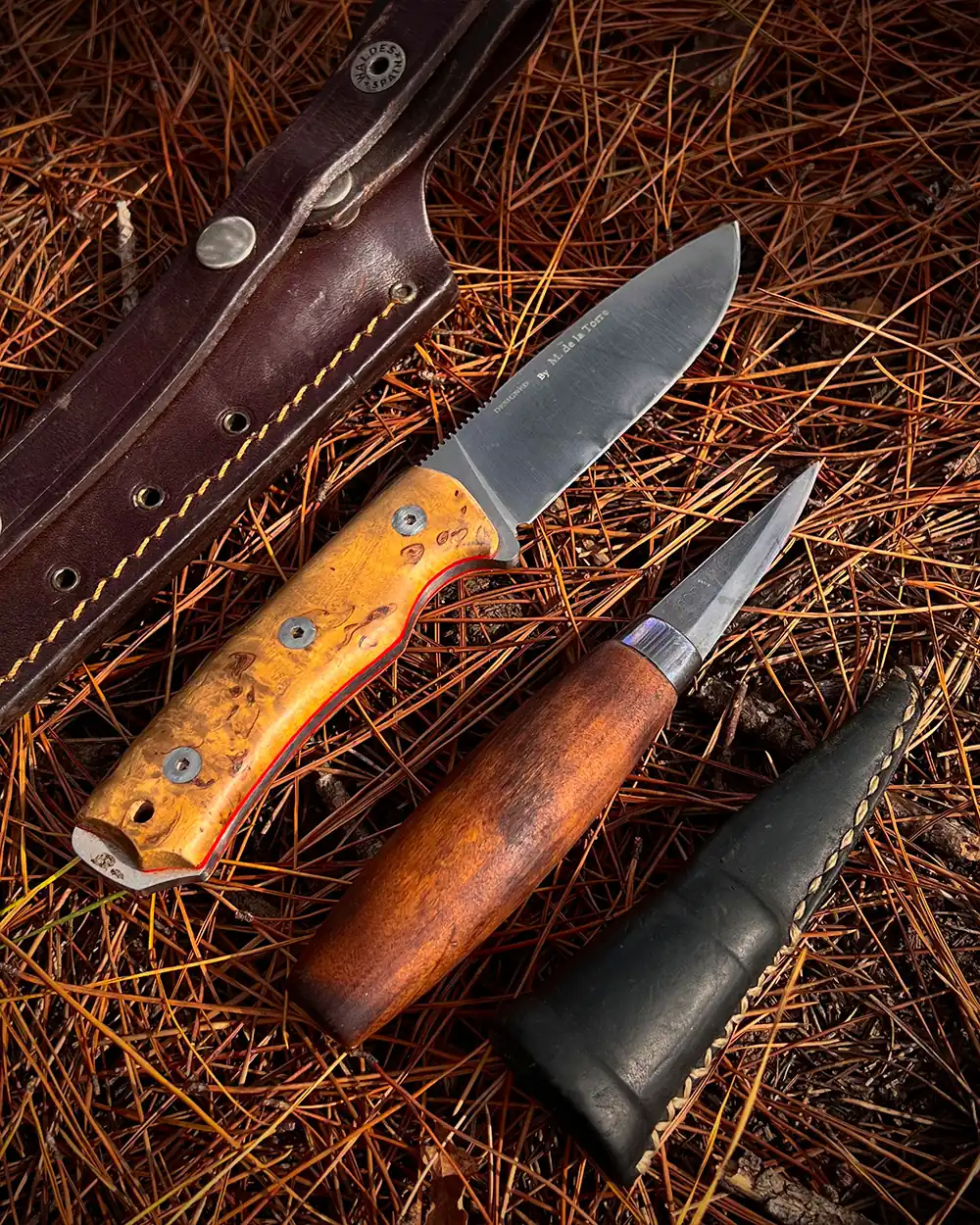
Fixed-blade knife. I use a sturdy knife for batoning and separating pieces once they’ve been cut with the saw, especially when I need more control than I get with the hatchet. A small rubber mallet is a great addition for this: it lets me strike the knife without damaging it, so I don’t have to keep cutting small branches just to use as batons.
Carving knife. A smaller knife for carving and cleaning up the pieces. I use it to remove the wood that doesn’t contain much resin, gradually working my way down until only the good, resin-rich fatwood is left.
Leather gloves. Resin is sticky and doesn’t come off easily, and a good pair of leather gloves also protects my hands when I’m working with rough wood. They’re especially useful when clearing away vegetation, brambles and other undergrowth to get to old stumps and fallen trees.
Small backpack and a spare bag. I carry a small backpack that’s big enough for all my tools, with plenty of room left for the fatwood. I clean every piece in the field, so I only bring home the good stuff. And if I find more than I expected, I keep a spare bag with me so I never have to leave anything behind.
A Note on Rules and Permission
Before cutting into stumps or dead trees, check the regulations where you live. Some areas allow this freely, others require permission or restrict wood collection in protected forests. A quick check beforehand can save you a lot of trouble.
Take This Knowledge Into the Field
Finding good fatwood gets easier with practice. Once you start recognizing the signs, resin on a stump, a healed stub on a living tree, the skeleton of a fallen pine, you will notice them everywhere you go, and one afternoon in the right forest can set you up with fire starter for months. That’s the whole method behind how to find fatwood, every single time I step into the woods. It is exactly this kind of hand collected, naturally saturated fatwood that goes into every kit at LastBush Survival, gathered the same way described above, piece by piece, tree by tree.
I’d genuinely like to hear if you try this method yourself, or if you do things differently where you’re from.
If you’d rather skip the search altogether, we also sell the same Fatwood ready to go, and it pairs perfectly with our Suhar Ferro Rod for lighting it every time.