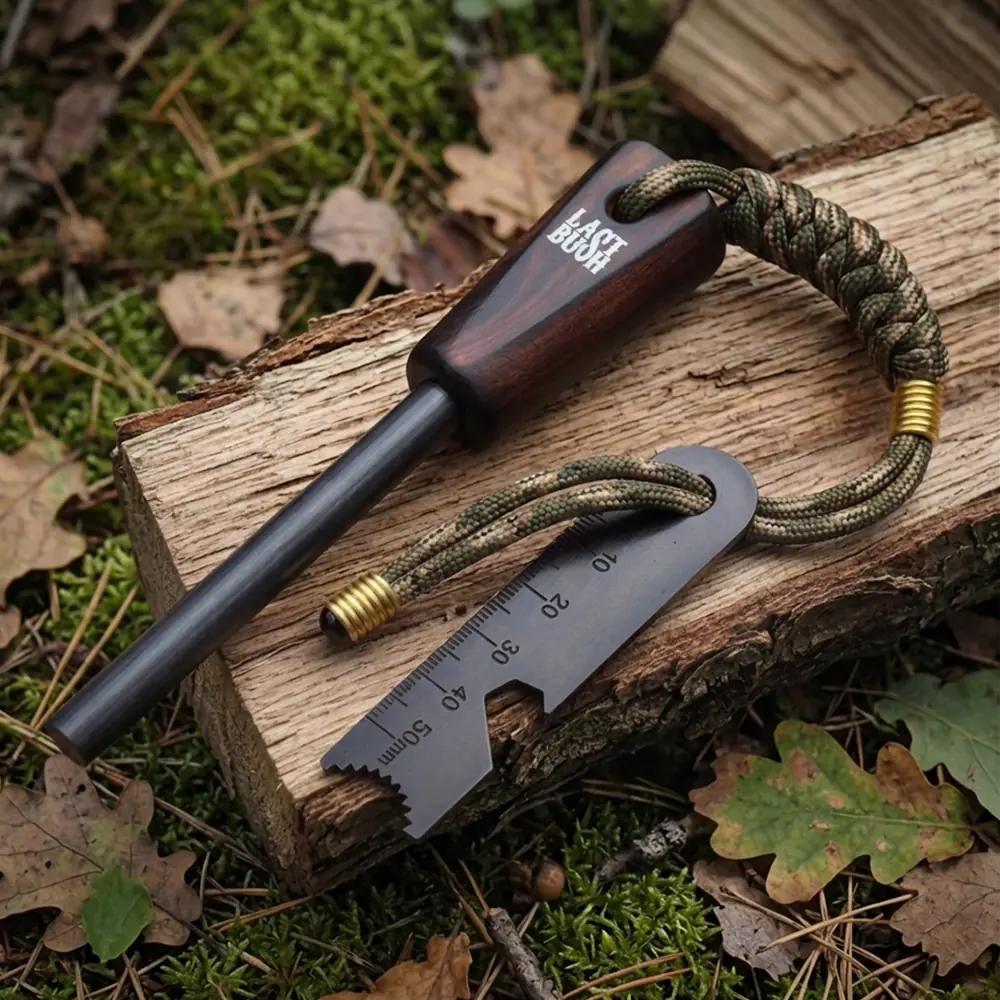
Lighters run out of fuel, and matches fail the moment they get wet. A ferrocerium rod avoids all of that. No valves, no flame to protect, no moving parts to fail. It simply works in conditions that shut everything else down.
But owning one doesn’t guarantee a flame. Many beginners scrape away at a rod with confidence and get nothing—not because the tool is weak, but because they expect it to do the work for them. A ferro rod is a raw ignition source. To use it effectively, you need to understand how sparks are formed, how they behave, and how to direct them exactly where they need to go.
This guide breaks down the complete process of generating molten sparks efficiently and turning them into a reliable fire, even in challenging conditions.
The Mechanics: Shaving, Not Scratching
Beginners often treat a ferro rod like a match, creating friction through frantic scrubbing. This produces weak, fleeting sparks that die mid-air before they reach the tinder. To ignite a fire reliably, you need to physically shave the metal, not just scrape it.
A ferro rod works because it is pyrophoric, it ignites when exposed to oxygen as small shavings are removed. Apply heavy pressure with a sharp 90-degree edge (such as the striker or the back of your knife) to peel off ribbons of ferrocerium. You should feel the striker “bite” into the rod. Done correctly, this friction ignites the metal shards at approximately 3,000°C (5,430°F).
Practicing the right pressure and movement is essential. Two practical tests are invaluable for building muscle memory:
- Pepper Test: Scrape slowly to produce unlit shavings that resemble coarse pepper. If no material comes off, you aren’t applying enough pressure. This helps you develop the right “bite”.
- Floor Test: Once you can produce shavings consistently, increase your speed slightly. Sparks should hit the ground still burning. If they extinguish before landing, you need more pressure or a sharper edge.
The Physics of Fire: Understanding Surface Area
A ferro rod produces intense heat, not a persistent flame. To catch that heat, tinder must have a large exposed surface area. In physics terms, “large” doesn’t mean a heavy log; it means thousands of microscopic fibers exposed to oxygen.
The Closed Book Paradox
A closed book illustrates this perfectly. Strike a flame to the cover, and it may singe slightly—but it won’t catch fire. The pages are compressed, denying oxygen to the fuel. Tear out every page and crumble them into a loose pile, and fire spreads instantly. The total material hasn’t changed, but the exposed surface area has increased dramatically.
Nature’s Version: Cattail
Cattail (Typha) seed heads demonstrate the same principle in the wild. The compact brown “cigar” of seeds feels firm and resistant to sparks. Unless you pinch and fluff the fibers, sparks bounce harmlessly off. Once fluffed, thousands of micro-filaments are exposed, creating instant ignition potential.
Key takeaway: Fire is rarely about finding fuel—it’s about preparing it to trap heat efficiently. Crush fibers, scrape surfaces, or fray ends until the material becomes chaotic and airy. This ensures that the fleeting energy of a spark is trapped by both fuel and oxygen, guaranteeing ignition.
Natural Tinders: Scavenging the Wild
Once you understand the physics of surface area, your eyes stop looking for “wood” and start scanning for texture and chemistry. Survival in the wild often comes down to categorizing materials by their ignition potential.
Chemical Accelerants: Resin and Oil
Start by seeking nature’s built-in accelerants:
- Birch bark: Rich in betulin oils, it ignites even when damp if scraped into fine powder.
- Resin-glazed pine needles: Look at the base of old trees. The sap-glazed needles act like natural matches, catching sparks instantly.
- Fatwood: Found in weathered pine stumps, this dense, amber-colored heartwood is saturated with resin. Waterproof and hot-burning, it is among the most reliable natural tinders.
Fibrous Fuels: Managing Humidity
If resinous materials aren’t available, move to fiber. Dry grass, leaves, and thin bark are abundant but deceptive—they absorb humidity quickly. To make them effective, break, shred, and fluff the fibers into a fine, airy mass that maximizes surface area for heat retention.
The Ember Strategy: Efficient Firecraft
Trying to light a damp grass nest directly with a ferro rod often leads to frustration. A more effective method is to first catch a spark in a slow-burning material to create a glowing ember.
Soft, dry punkwood from inside dead logs or dried fungi like chaga and horse hoof fungus act as excellent spark sponges. A single precise strike can produce a small ember. Once established, move the ember into your tinder bundle and blow gently to transform it into flame.
Structural Wood: Escaping Wet Ground
When the forest floor is soaked, look up. Dead standing wood that hasn’t touched wet soil often contains dry cores. Split a branch to access it, and shave feather sticks, bypassing wet conditions entirely.
Pre-Made Tinders: The Reliable Choice
Even with a solid understanding of natural tinder, having pre-made tinder on hand is invaluable. Bad weather, fatigue, or simple misfortune can turn an easy fire into a stressful challenge.
Prepared materials such as Waxed Jute, Magic Cottons, and Fatwood offer reliable ignition and burn time, regardless of the environment. They serve as a safety net when natural tinders are too damp or scarce, and also provide a dependable starting point for teaching or practice.
Many bushcrafters enjoy harvesting fatwood themselves or waxing jute at home to deepen their connection to the craft. Others prefer a ready-to-go solution, which you can also find on our shop.
Advanced Striking Techniques: Force, Control, and Chaos
How you strike a ferro rod can mean the difference between fire, scattered tinder, or damaged gear.
Anchored Strike
Place the rod tip firmly against a solid base, such as a log. This allows full body weight behind the strike and maximizes sparks. But caution: over-striking can scatter your tinder pile. Anchor adjacent to your tinder, not inside it, and stop the striker’s momentum the instant it leaves the rod.
Pull-Back Method
For delicate fuels, this is the most controlled approach. Hold the striker hand still above the tinder, and pull the rod backward against a fixed edge. Sparks drop vertically with precision, avoiding disturbance of the nest.
Freehand Controlled Strike
Once your muscle memory is consistent, hold the rod suspended above the tinder. Drive the scraper slowly, applying full pressure, but brake mid-air before it runs off the rod. This delivers a concentrated burst of sparks directly into the core of your tinder.
Rapid Discharge Technique
In wet conditions, anchor the rod next to your tinder and scrub back and forth along the bottom inch. This creates a continuous rain of sparks, overwhelming moisture and igniting stubborn tinder. Highly effective, but consumes ferrocerium quickly. Use only when fire is non-negotiable.
Conquering Stubborn Tinder: The “Pre-Dusting” Secret
When natural or pre-made tinder is damp, one spark may not suffice. Shave a pile of unlit ferro dust into the center of your bundle using the slow scraping motion from the Pepper Test. Then deliver a single, strong strike. Sparks ignite the pre-shaved dust, producing an intense, magnesium-like flare that can dry out and ignite even wet or stubborn material.
Key Takeaways
Pre-made tinders offer a reliable safety net and excellent practice material.
Owning a ferro rod is not enough; technique is everything.
Maximize surface area: fluff, crush, or fray fibers to trap sparks.
Practice different striking methods to adapt to conditions.